
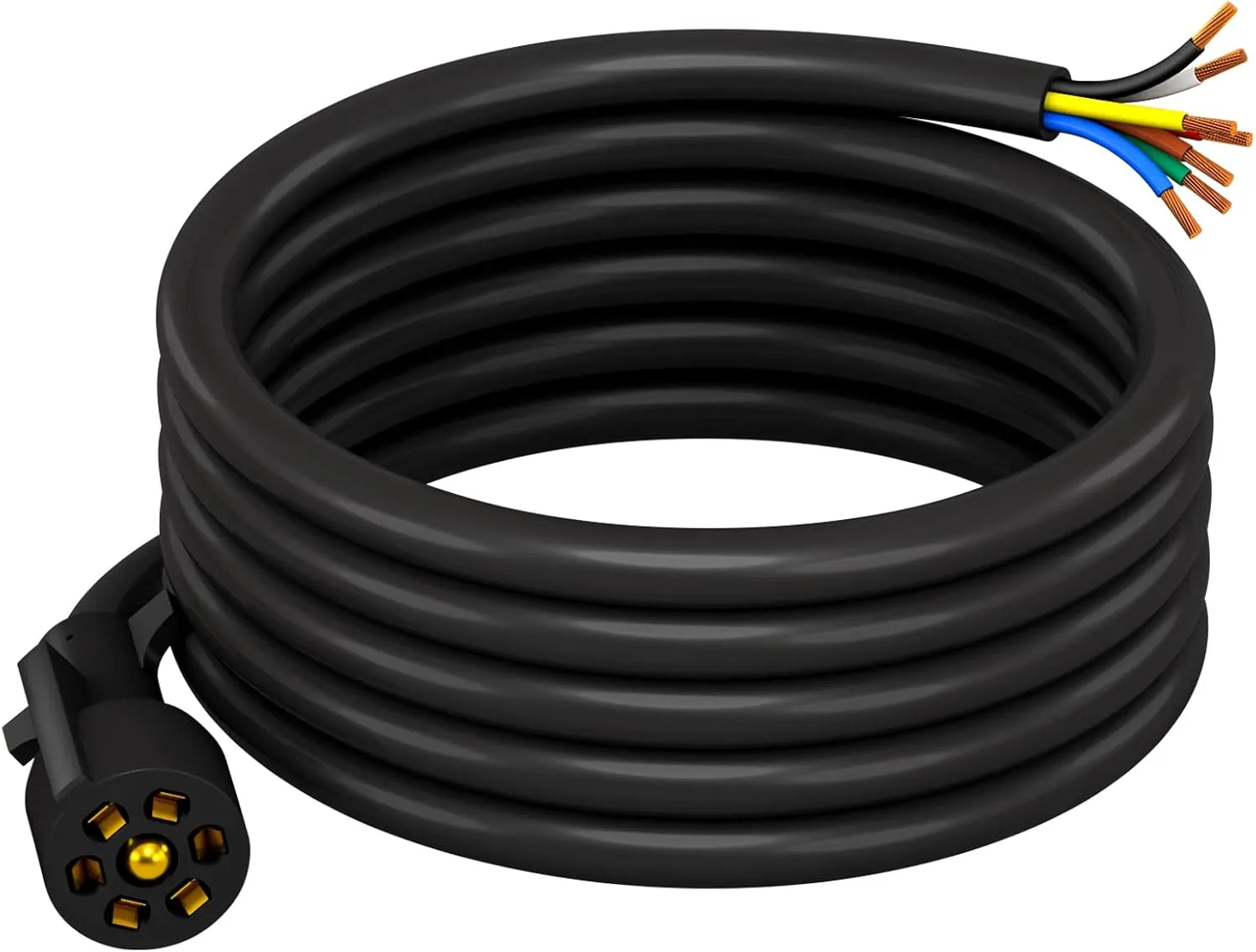
A 7-way trailer cord carries the whole trailer on one plug: ground, a 12 V charge line for the trailer battery, electric brakes, tail and running lights, left and right turn with stop, and reverse. The plug on this page has a round center pin with six flat blades around it, set in a keyed round body, so it seats in one position and no other.
Five builds come off the same tooling. There are cords with a molded plug and a bare cut end for field wiring, cords already landed in a 7-gang junction box, the plug and the socket on their own for repairs, and the junction box on its own. Conductor sizes follow the 7-way RV layout, so a replacement cord drops into the harness that is already on the trailer without re-pinning anything.
Cords for trailers that already have a junction box or a terminal strip. The plug is molded over the jacket, and the free end arrives with the conductors bare for screw terminals or crimp splices.
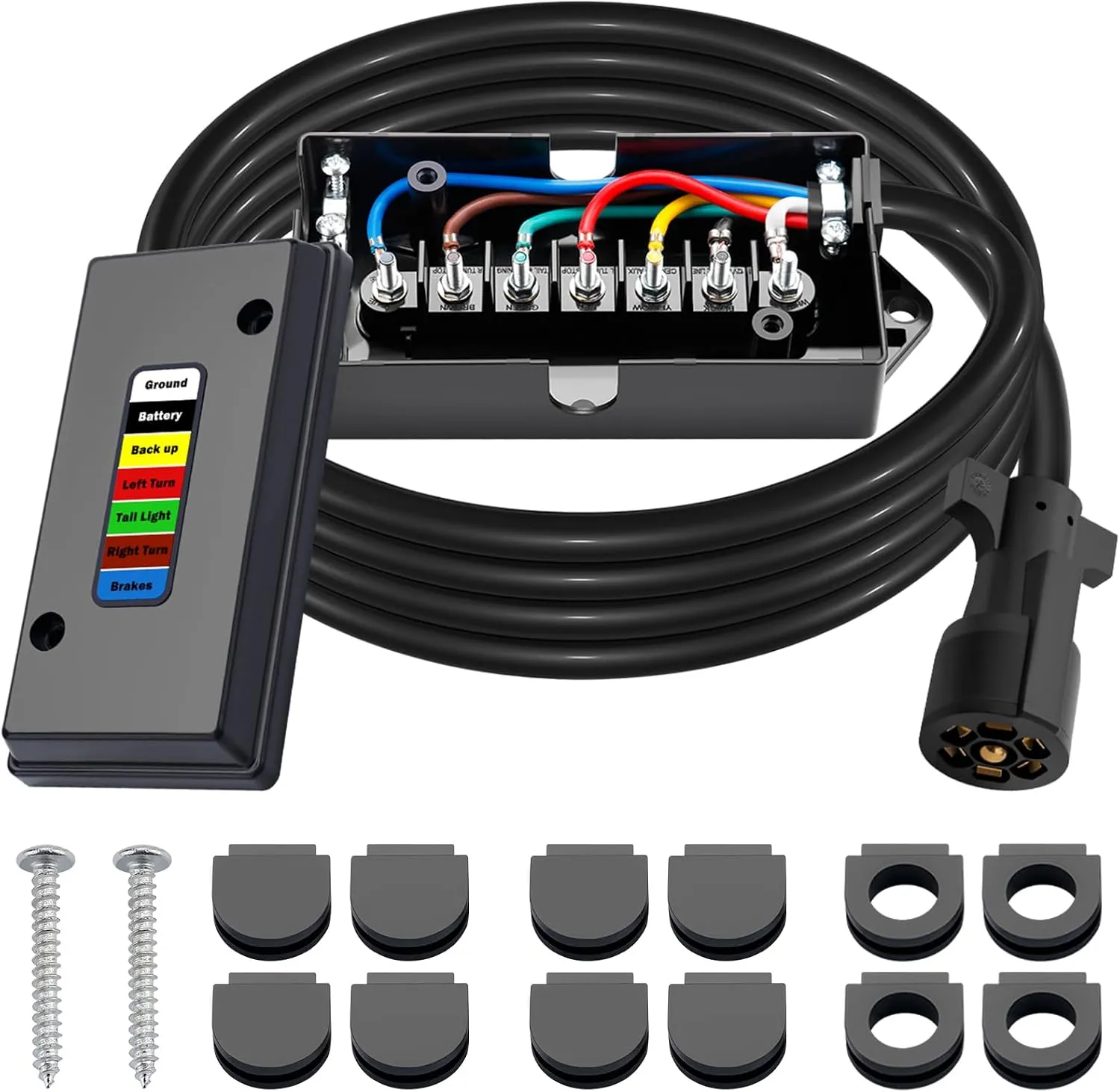
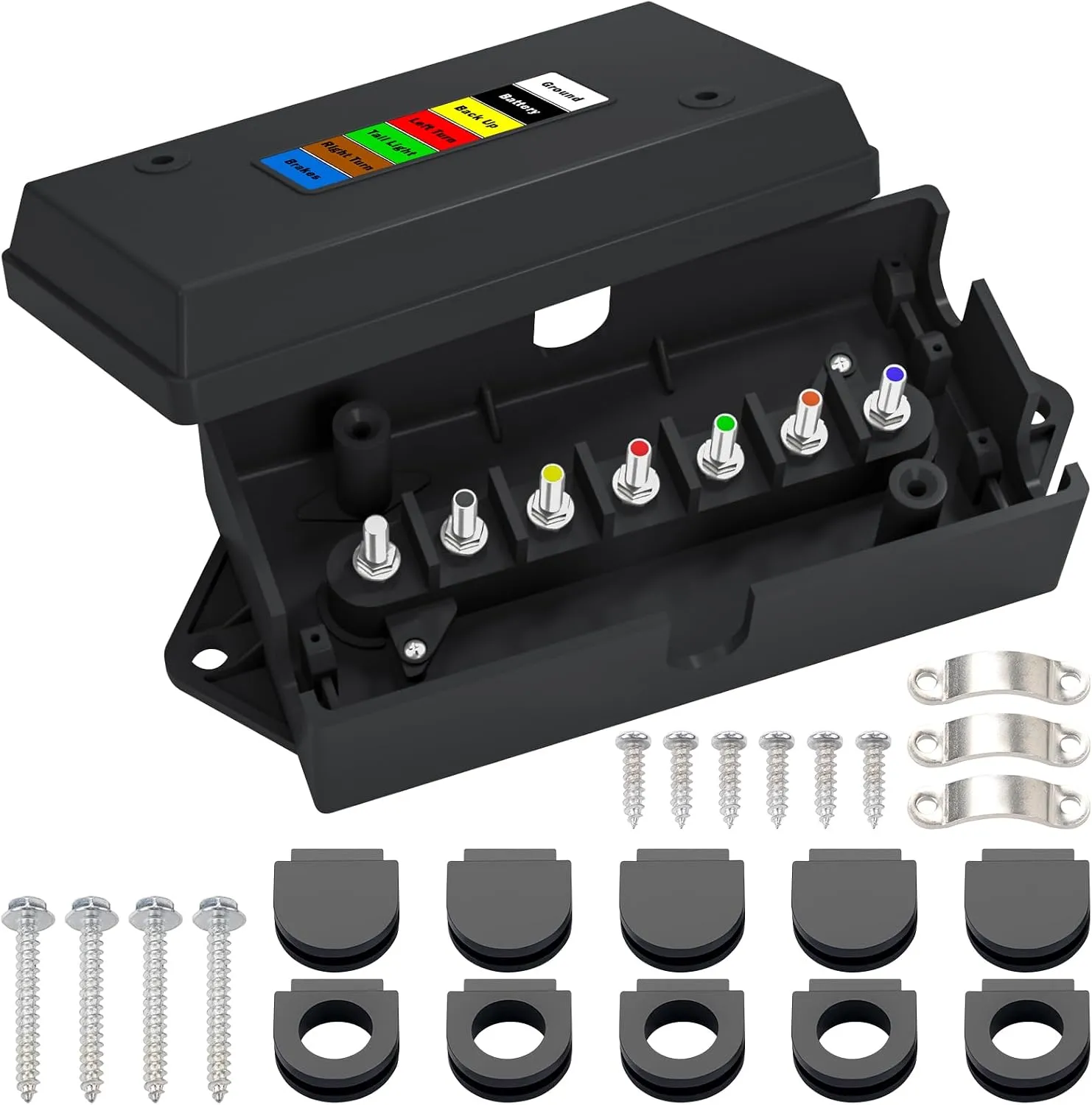
The same cord with all seven conductors already landed on a busbar inside a sealed box. Terminal functions, the number of cable entries and the lid can be changed to suit the trailer.
The fixed half and the removable half of the connection, plus the box the circuits land in. Used for repairs where a connector has corroded or been torn off, and for tow vehicles that were not built with a trailer package.
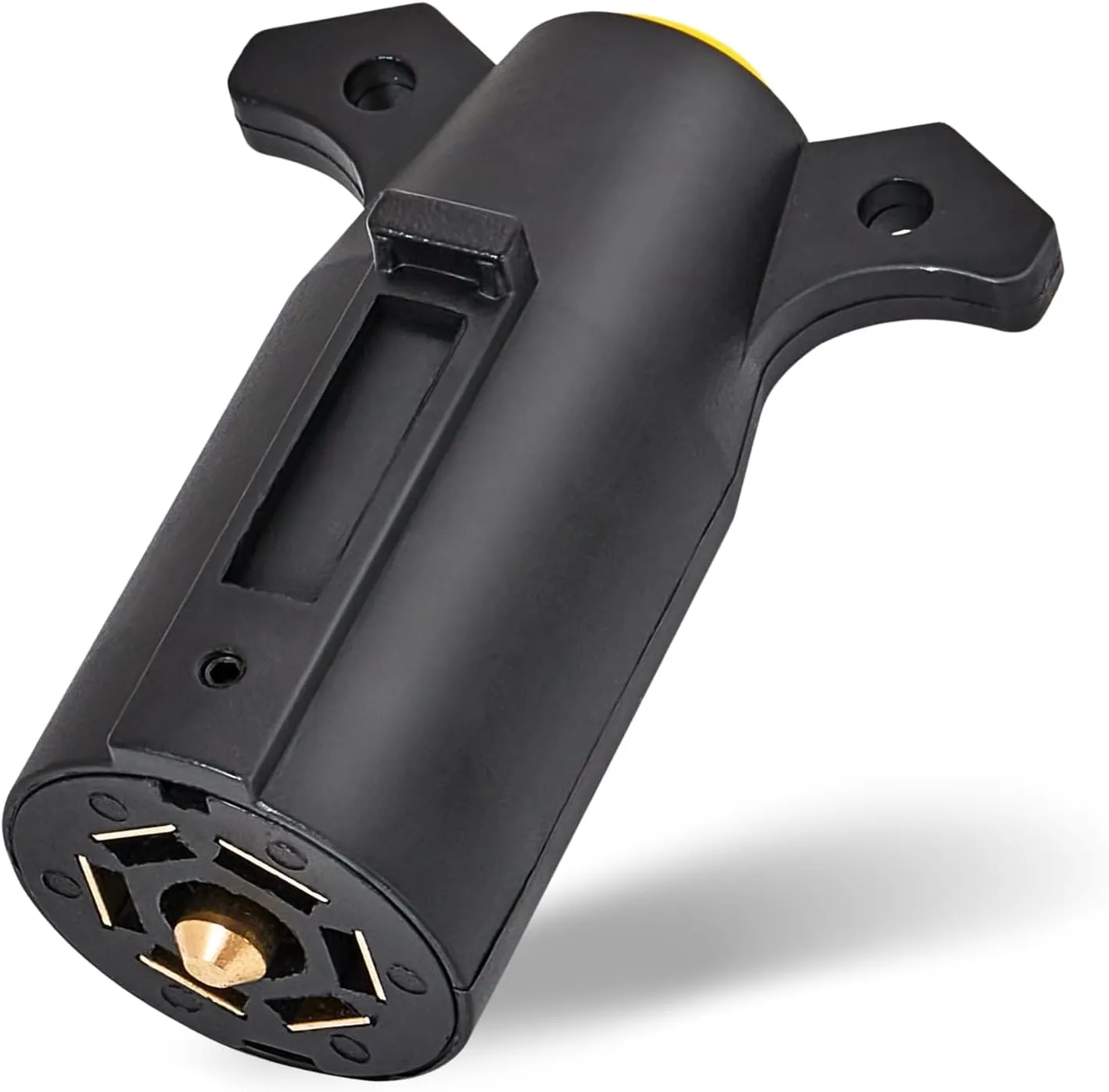
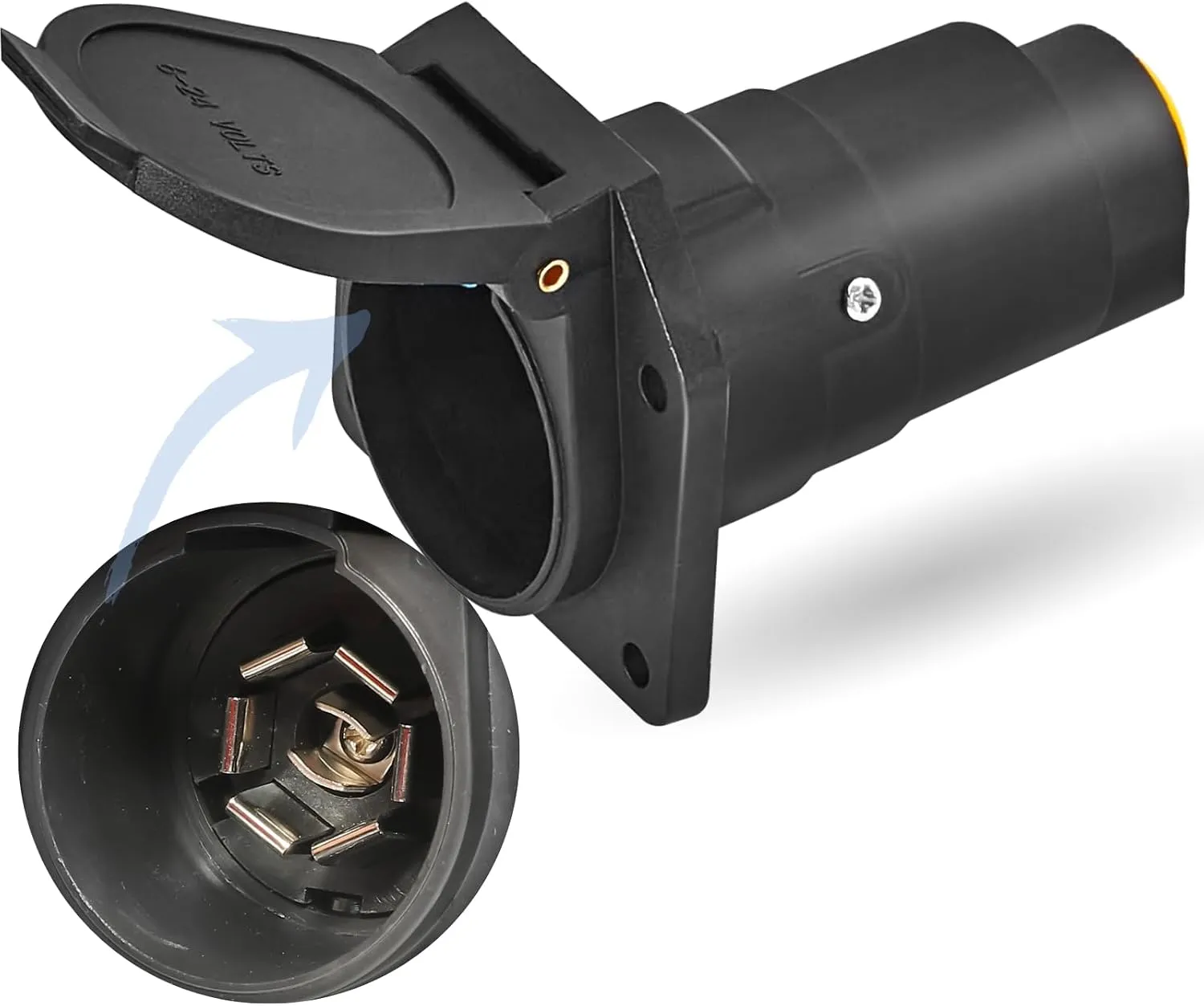
The pinout is the part that causes trouble, so check the socket before the order goes in. The 7-way blade connector on this page and the round pin SAE J560 connector used on heavy trucks sit close in diameter at the housing, and the difference that matters is at the face. A photograph of the socket face, or of the old plug, settles it in one look.
On the trailer side the cord is wired once and then left alone. The bare end goes to the junction box, a terminal strip or a splice, and the plug stays on the tow vehicle end. Where the box is already fitted, each conductor is cut to length and landed on its own terminal before packing, so the installation comes down to mounting the box and connecting the trailer circuits.
White is ground, black is the 12 V charge line, blue is the brakes, green is tail and running lights, red is left turn and stop, brown is right turn and stop, and yellow is reverse. Ground and charge are 10 AWG, the brakes are 12 AWG, and the four lighting runs are 14 AWG. A different colour code can be built to a drawing at no extra cost, which is worth asking about if the trailer was wired to something other than the standard layout.
Lengths from 3 ft to 12 ft are held as standard and anything outside that range is cut to order, measured from the back of the plug to the cut end or to the box. The jacket is round black PVC over stranded cores, rated for use down to -40 C, and it can be printed with a customer name and a part number on larger runs.
Samples are available for any build in the range. Production runs start at 200 to 1000 pieces, with 15 to 20 working days after the order and the artwork are confirmed, and private label work covers the plug body, the box lid label and the packing. The electrical part does not change with the name on it.
How a loom is put together is on the wire harness page, and the grommets and seals used on these parts are covered in the IP44 waterproof power cord guide.
Common questions about 7-way trailer power cords and wire harnesses
