
An inlet box and an outlet box are wall mounted enclosures that move a heavy duty connection to where the cord can reach it, and they face opposite ways. The inlet box has a male inlet: the generator cord plugs into it, and the feed runs through the wall to a transfer switch or a panel. The outlet box has receptacles: the supply comes in from a protected circuit, and a trailer, a coach or a tool plugs in to take power out.
Seven models cover the configurations these jobs use. On the generator side there are NEMA L14-30P, NEMA L5-30P and NEMA SS2-50P inlets. On the RV side there are NEMA TT-30R and NEMA 14-50R receptacles, two of them sharing the enclosure with a NEMA 5-20R duplex, and two more carrying a breaker and a padlock hasp. Every model is ETL listed.
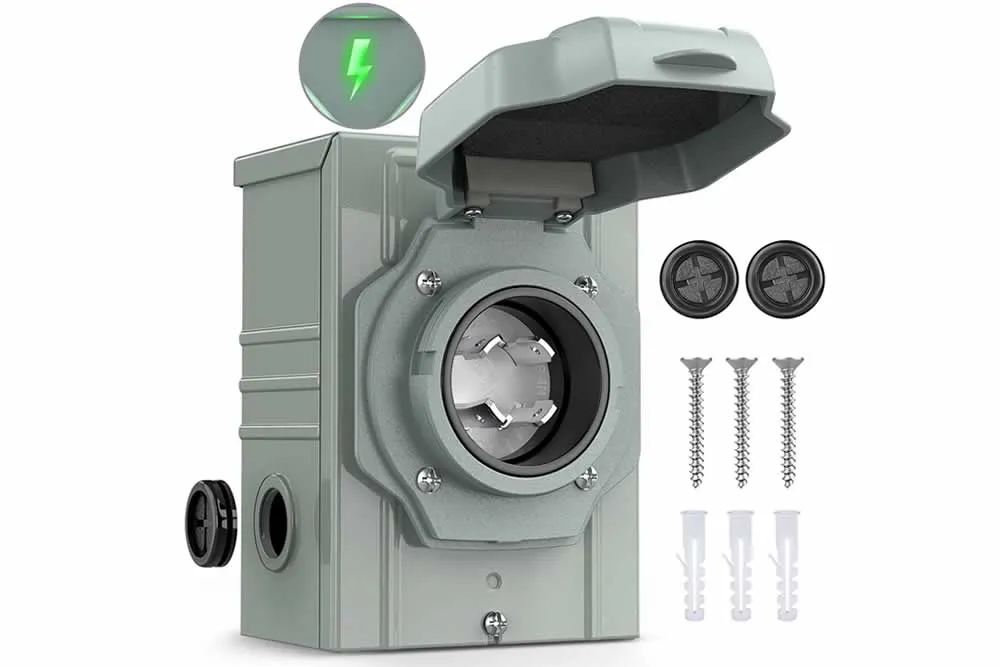
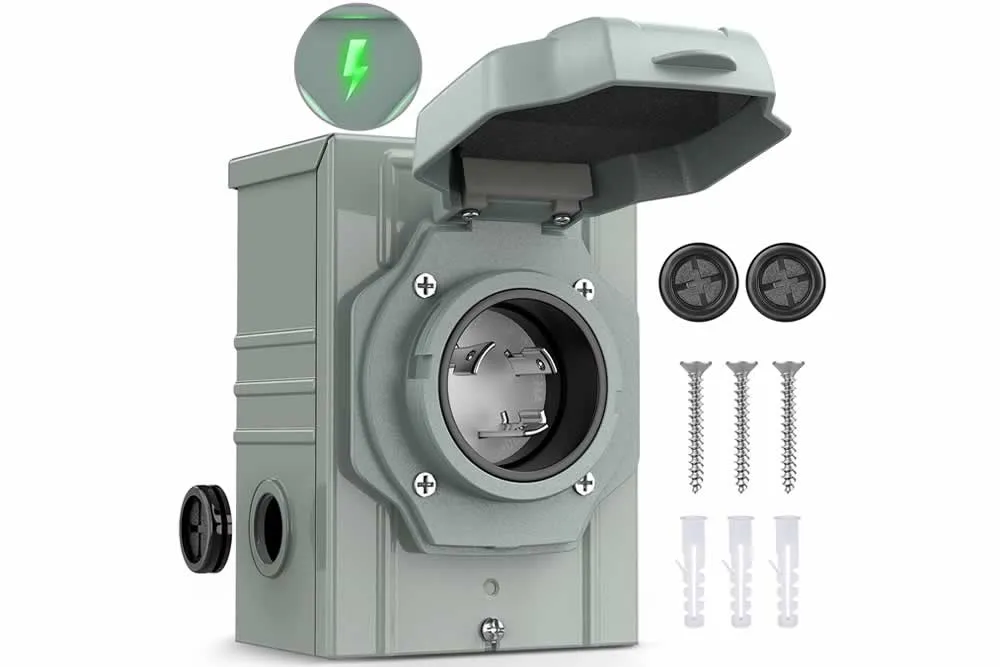
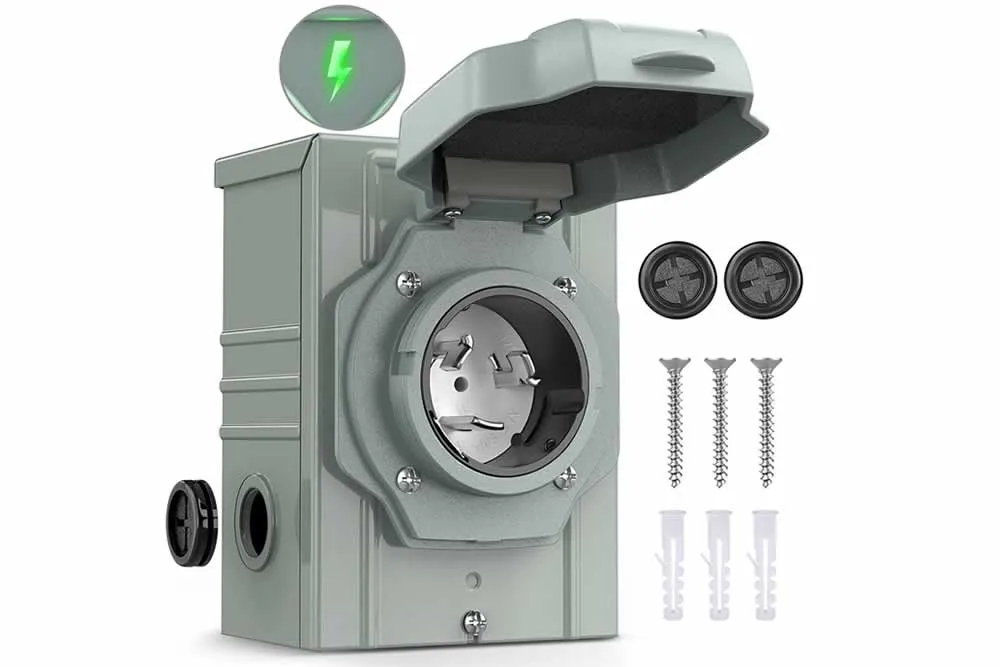
Three inlets for portable generator feeds. The male inlet faces out, the cord locks into it, and the wiring behind the box lands on a transfer switch or a breaker in the panel.
Four outlet boxes for trailer and coach parking spots, two of them with the breaker and the padlock hasp fitted. Supply each box from its own protected circuit.
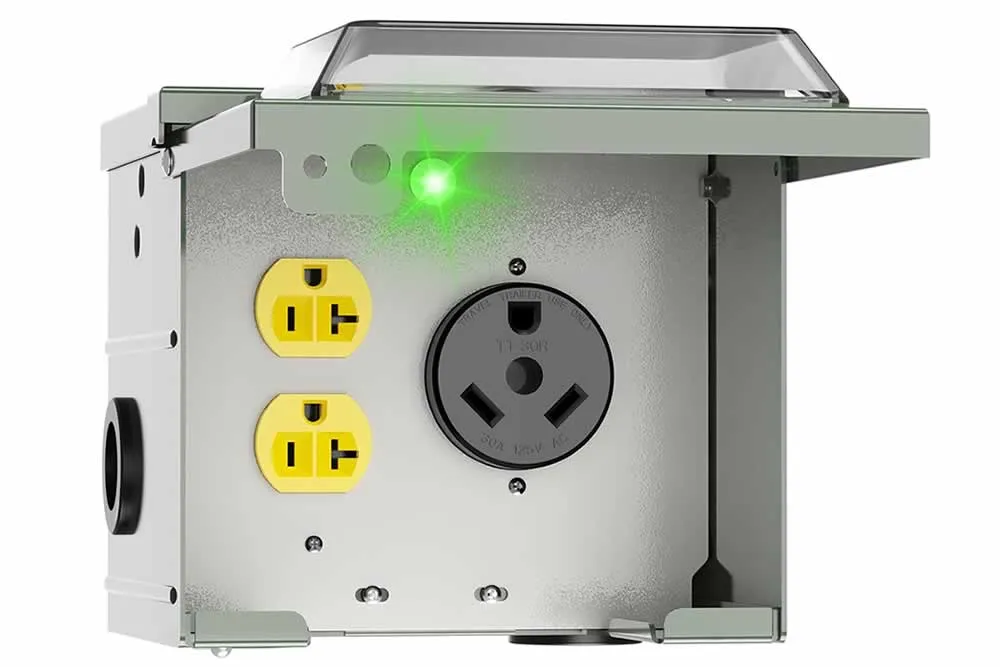
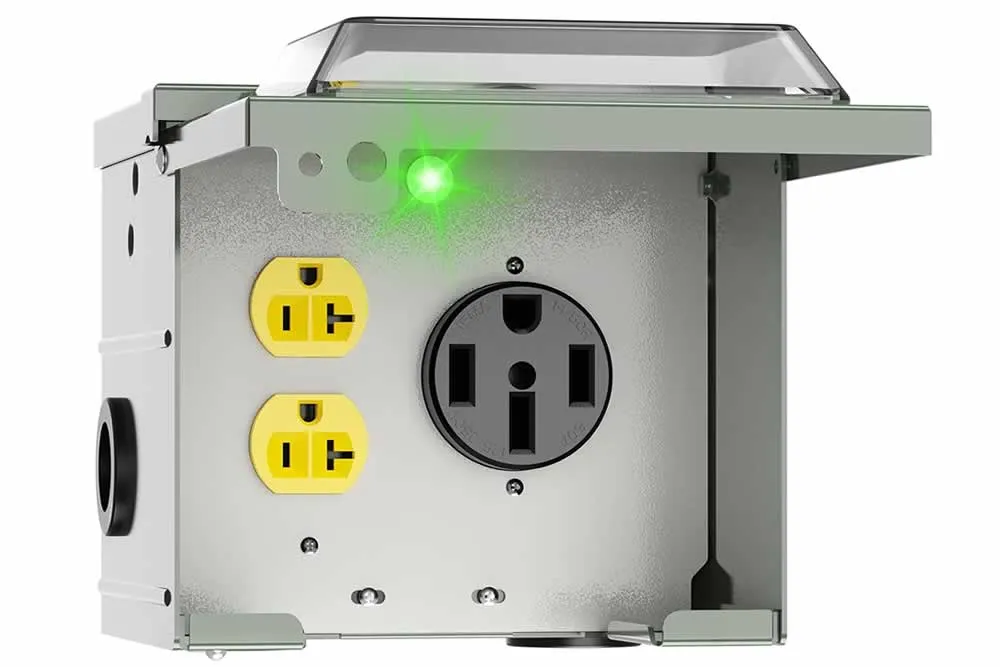
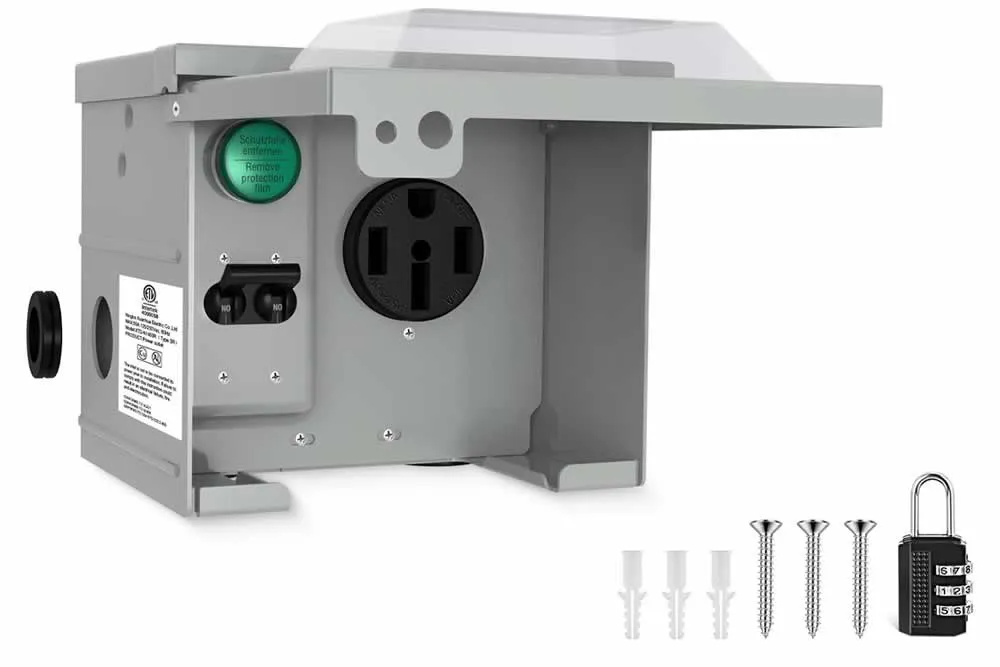
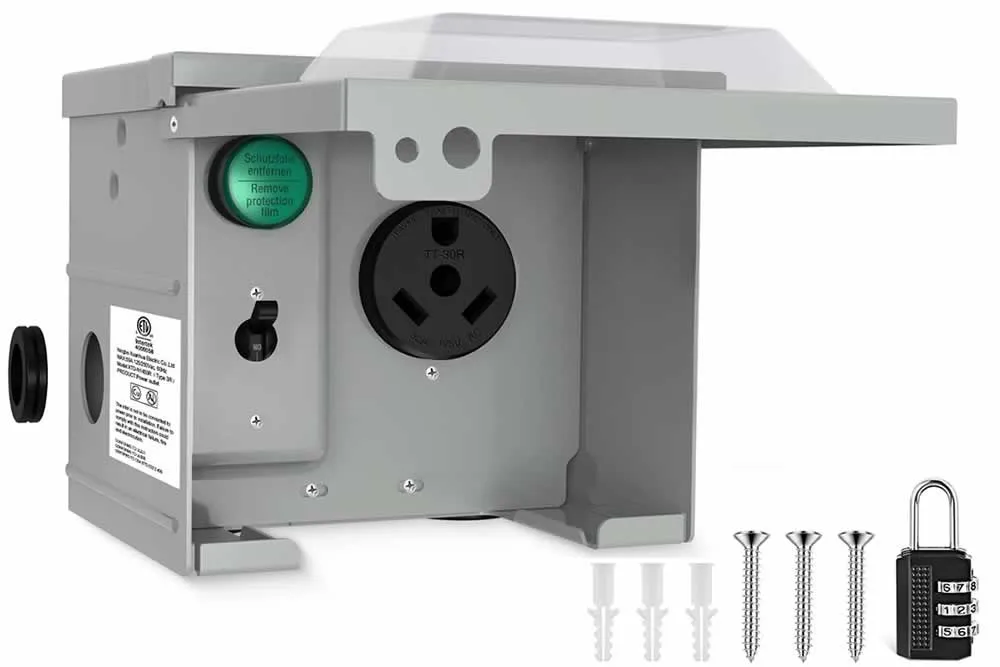
Match the connector to the cord that is already in use. A generator with an L14-30R outlet needs the L14-30P inlet, a set with an L5-30R outlet needs the L5-30P box, and a 50 amp standby set or shore cord takes the SS2-50P inlet. On the RV side the trailer or coach inlet decides the outlet box: TT-30R for a 30 amp trailer, 14-50R for a 50 amp coach, with the 5-20R duplex on the two combination boxes for everything else at the parking spot.
Two limits are worth knowing before the order. A plain box is not a protective device, so its circuit protection stays at the panel or in the transfer switch, while the breaker versions carry a breaker in the enclosure as well. And the connectors are not interchangeable: a 14-50 plug will not enter a TT-30R receptacle, and a 50 amp cord will not enter a 30 amp inlet.
The breaker versions add a single-pole 30 amp or double-pole 50 amp breaker with the switch on the front, plus a hasp that takes a padlock, so the outlet can be locked out of use while the feeder stays connected. All seven enclosures mount on a wall, a post or a pedestal through pre-drilled holes, and the cable entries arrive plugged until the feeder is pulled in.
Samples are available for any model in the range. Production runs start at 200 to 1000 pieces, with 15 to 20 working days after the order and artwork are confirmed, and private label work covers the enclosure label and the packing. The electrical part does not change with the badge on it.
Background on the connectors is in the NEMA twist locking power cord guide and the IP44 waterproof power cord guide.

Some NEMA Configurations, Use for RV, Generator, Shore Power, EV, Welder, Dryer Power Extension Adapter Cord Sets
Common questions about generator power inlet boxes and RV power outlet boxes
They face opposite ways. An inlet box has a male inlet, so a cord plugs into it and the power flows from that cord into the building. An outlet box has receptacles, so power leaves it and a cord is plugged in to take it away. Generator connections use inlet boxes; RV pads, yards and shops use outlet boxes.
Match the generator outlet. A generator with a NEMA L14-30R outlet takes the box with the L14-30P inlet, which carries two 120V legs and keeps 240V circuits available. A generator with only an L5-30R outlet takes the three-wire L5-30P box, which is 125V only.
The box only provides the connection point. How that connection is used depends on what it feeds: a transfer switch or panel for a building, or a shore cord arrangement for a vehicle. An inlet box does not isolate the mains on its own, so any generator feed into a building still needs a transfer switch or an interlock.
Copper conductors sized for 50 amp on the circuit, with the run length and the installation method taken into account, protected by a 50 amp double-pole breaker. The box terminals accept the feeder at the sizes the factory drawing lists, so send the conductor size with the enquiry and we will confirm the terminal range before you commit.
Yes, the inlet and outlet boxes in this range are ETL listed, and certificates can go out with the quotation. Environmental compliance is RoHS, REACH and PAHS, with the test reports available on request.
The enclosures and receptacles are the same; the breaker versions add a 30 amp single-pole or 50 amp double-pole breaker inside the box and a switch on the front, plus a padlock hasp on the cover. Order the plain box where the circuit is already protected at the panel nearby, and the breaker version where the outlet is remote or has to be switchable and lockable.
Yes. Samples are available for any model, production runs start at 200 to 1000 pieces depending on the build, and 15 to 20 working days run after the order and the artwork are confirmed. Private label covers the enclosure label, the packing and the carton printing, and the electrical part does not change.
Yes. The inlet boxes take the locking cords covered in the NEMA twist locking power cord guide, and the RV side of the range sits alongside the RV surge protector adapters for pedestal work. Send the inlet and the outlet you need to connect and we will quote the pair.
