
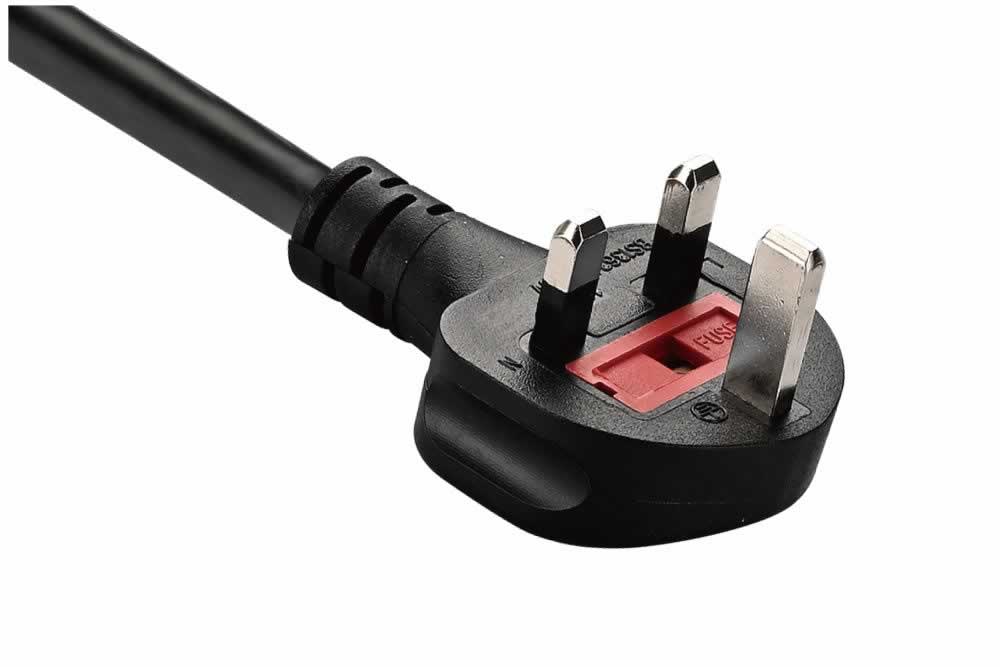
What Is a Malaysia Power Cord?
A Malaysia power cord is a flexible cord fitted with a 13 A fused Type G plug manufactured to MS 589, on 240 V 50 Hz single-phase mains. The plug holds a BS 1362 fuse between 3 A and 13 A, and both the plug and the non-armoured cable it sits on are regulated electrical equipment that must carry a Suruhanjaya Tenaga Certificate of Approval and the ST-SIRIM label.
The pin pattern is the British one, so a cord sold in Kuala Lumpur looks like a cord sold in Manchester. What differs is the paperwork: Malaysia runs its own standard numbers, its own test body and its own market approval, and a UK ASTA certificate does not stand in for any of them. That gap is where most first orders from China get delayed.
Malaysia Quick Facts
- Single-phase 240 V, 50 Hz; three-phase 415 V, 50 Hz, four-wire
- Plug: Type G, 13 A, three rectangular pins, fuse inside the plug head
- Plug standard: MS 589-1:2011; socket standard: MS 589-2:2018
- Regulator: Suruhanjaya Tenaga (Energy Commission), Certificate of Approval
- Test and certification body: SIRIM QAS International, ST-SIRIM label on the product
- Appliance lead size: 3-core 0.75 to 1.5 mm2, jacket marked 250 V
What decides the cord you need
- The load: it sets the fuse rating, and the fuse rating sets the cable size
- Whether the plug is moulded on the line or shipped as a rewireable plug top
- PVC cable indoors, rubber cable where the lead is dragged, flexed or used outdoors
- Length, jacket colour and any printing the buyer's packaging calls for
- The equipment end: an IEC 60320 connector, a terminal end or bare conductors
What MS 589 Covers
MS 589 is the Malaysian standard for 13 A plugs, socket-outlets, adaptors and connection units. It is published in parts, and the two that matter on a purchase order are Part 1 for plugs and Part 2 for socket-outlets. The text follows the British BS 1363 family closely, which is why the pin layout, the fuse position and the shutter action are familiar, but the revision dates are Malaysian and an inspector will ask for them by number.
| Document | Title | What it governs on a cord order |
|---|---|---|
| MS 589-1:2011 | 13 A plugs, socket-outlets, adaptors and connection units. Part 1: rewirable and non-rewirable 13 A fused plugs (third revision) | The plug itself: pin dimensions, fuse carrier, cord grip, sleeved pins, marking |
| MS 589-2:2018 | Part 2: 13 A switched and unswitched socket-outlets (fourth revision) | The socket the product plugs into; defines the shutters and contact geometry the plug must match |
| MS 1577:2003 | Socket-outlet and plug combination | Legacy 15 A round-pin fittings still listed as regulated equipment in Malaysia |
| BS 1362 | Fuse link, 13 A household and similar purposes | The fuse inside the plug top: 3 A, 5 A, 7 A, 10 A or 13 A |
One practical point that catches people out: the standard governs the plug and the socket, but the flexible cord is listed separately as regulated equipment. Malaysian approval covers "wire, cable and cord, non-armoured" as its own line item, so a cord set is checked on two fronts, the plug assembly and the cable, and the cable needs its own approval reference. Ask for both by number.
Pins, Fuse and Shutters
The 13 A plug is a three-pin device in which the earth pin is longer, thicker and set above the two current-carrying pins. The earth pin measures 4 by 8 mm and 22.7 mm long. Line and neutral are 4 by 6.35 mm and 17.7 mm long, with 22.2 mm between centres. Because the earth pin is the long one, it reaches the socket first, and that is what trips the shutters over the live and neutral apertures. A two-pin plug cannot open them, which is why a European Europlug does not work in a Malaysian socket without an adapter.
Line and neutral pins carry insulating sleeves over the rear part of their length, the same protection introduced into BS 1363 and carried into the Malaysian plug. The sleeve matters when a plug is partly withdrawn with the appliance still switched on: fingers cannot reach metal. On a moulded plug the sleeve is part of the moulding; on a rewireable plug top it is part of the pin moulding and cannot be added later, so a plug top without sleeves is the wrong part regardless of price. Cheap plug tops fail here.
The fuse is the first decision
Fuse first, cable second, plug body third. Reverse that order and the assembly fails the type test the approval file depends on.
Malaysia follows the fused-plug principle: the protection for the flexible cord sits in the plug, so a fault in the lead is cleared at the plug rather than waiting for the distribution board. Pick the fuse for the appliance, not for the socket, because a 13 A fuse in front of a 0.75 mm2 lead protects the appliance and not the cable.
| Fuse | Power at 240 V | Typical appliance | Sensible cable |
|---|---|---|---|
| 3 A | 720 W | Table lamps, chargers, small fans, audio | 0.75 mm2 |
| 5 A | 1,200 W | Small kitchen appliances, blenders, rice cookers under 1 kW | 0.75 or 1.0 mm2 |
| 10 A | 2,400 W | Microwave ovens, washing machines, dishwashers | 1.0 mm2 |
| 13 A | 3,120 W | Kettles, irons, heaters, air-conditioning units on a 13 A outlet | 1.5 mm2 |
Moulded or rewireable is the next fork. A moulded plug is tested as one assembly with the cord and is the normal choice for volume appliance leads. A rewireable plug top suits field assembly, replacement plugs sold as accessories and short runs, and it carries its own approval. Both must show the same markings: rating, standard number, manufacturer identification and the certification label.
SIRIM and the ST Certificate of Approval
Three names get used interchangeably in conversation and mean different things on paper: MS 589 is a standard, SIRIM QAS International is the body that tests and certifies to it, and Suruhanjaya Tenaga is the regulator that issues the Certificate of Approval and requires the ST-SIRIM label on the equipment. A supplier who says "SIRIM approved" is usually holding a test report and a certificate of conformity, which is evidence, not market permission.
| Item | Who issues or holds it | What it means for an order |
|---|---|---|
| MS 589-1:2011 | Standards Malaysia publishes the standard | The design and test requirements the plug is built to; no certificate in itself |
| SIRIM QAS test report and certificate | SIRIM QAS International | Type test evidence that the plug and cord assembly meets MS 589; this is what the CoA file is built on |
| Certificate of Approval (CoA) | Suruhanjaya Tenaga, through its online system | The legal permission to manufacture, import, advertise or sell that model in Malaysia |
| ST-SIRIM label | Issued through SIRIM on behalf of ST | Affixed to the approved equipment; an unlabelled model cannot be sold even with a valid test report |
There is a structural point here that decides who does what. The CoA is held by a Malaysian registered applicant, normally the importer or the local manufacturer, not by the overseas factory. A Chinese cord maker can supply the type test reports from SIRIM QAS, the construction drawings, the material declarations and the samples, and can build to the approved design, but the application and the label allocation sit with the buyer's Malaysian entity. When a purchase order says "CoA included", ask which party's name is on it. The name matters.
The cord is regulated too. Malaysia's regulated equipment list carries non-armoured wire, cable and cord as a separate category, so the cable on the lead needs its own approval reference, not just the plug. Send both references with a quotation request.
Cables and Current Ratings
Malaysian appliance leads use the harmonized European cable codes. The same H05VV-F that ships on a German appliance ships on a Malaysian one, because the cable is bought to a harmonized code and a 250 V jacket covers 230 V and 240 V markets alike. PVC is the default for indoor equipment. Rubber appears where the lead is handled roughly: power tools, outdoor equipment, and appliances that run warm for long periods.
| Code | Construction | Typical current on a short lead | Where it is used |
|---|---|---|---|
| H05VV-F 3G0.75 | PVC, 3 core, 0.75 mm2 | 6 A | IT equipment, chargers, small appliances |
| H05VV-F 3G1.0 | PVC, 3 core, 1.0 mm2 | 10 A | Kitchen appliances, washing machines, office equipment |
| H05VV-F 3G1.5 | PVC, 3 core, 1.5 mm2 | 16 A | Kettles, heaters, air-conditioning on a 13 A plug with 3.1 kW load |
| H05RN-F 3G1.0 | Rubber, 3 core, 1.0 mm2 | 10 A | Outdoor tools, garden equipment, workshop leads |
| H07RN-F 3G1.5 | Heavy rubber, 3 core, 1.5 mm2 | 16 A | Site equipment, pumps, three-phase adaptors |
Core colours are brown live, blue neutral and green with a yellow stripe for earth, in line with the harmonized code. The jacket carries the cable code, the voltage rating, the conductor size and the manufacturer's mark; a cable that has passed through Malaysian approval also carries the certification marking required for the cable category. Length is quoted from the plug face to the end of the connector, and that convention should be written into the drawing, because two mills measure a lead differently when nobody says. Length counts as well.
Equipment End Options
The Malaysian end is fixed by the wall socket; the equipment end is where a cord set becomes specific to a product. IEC 60320 connectors cover most of it, and the same connector bodies used for Europe and the UK carry over, since the connector ratings and temperature classes are international.
| Connector | Rating | Common host in Malaysia |
|---|---|---|
| C5 | 2.5 A, 250 V | Laptop adapters, small power supplies, projectors |
| C7 | 2.5 A, 250 V | Set-top boxes, chargers, radios with a figure-8 inlet |
| C13 | 10 A, 250 V | Monitors, desktops, PDU outlets, test equipment |
| C15 | 10 A, 250 V, 120 C | Kettles and appliances that run hot near the inlet |
| C19 | 16 A, 250 V | Servers, UPS units, blade chassis, lab supplies |
Terminal ends stay common in Malaysia for appliances that are wired into a connector block rather than plugged into an inlet: ring terminals, fork terminals, ferrules or a stripped and tinned end. The choice is usually set by the appliance's internal wiring and by the creepage distance in the housing. Full connector detail, including the C13 and C19 body variants, sits on the IEC 60320 connector page.
Malaysia Cords We Build
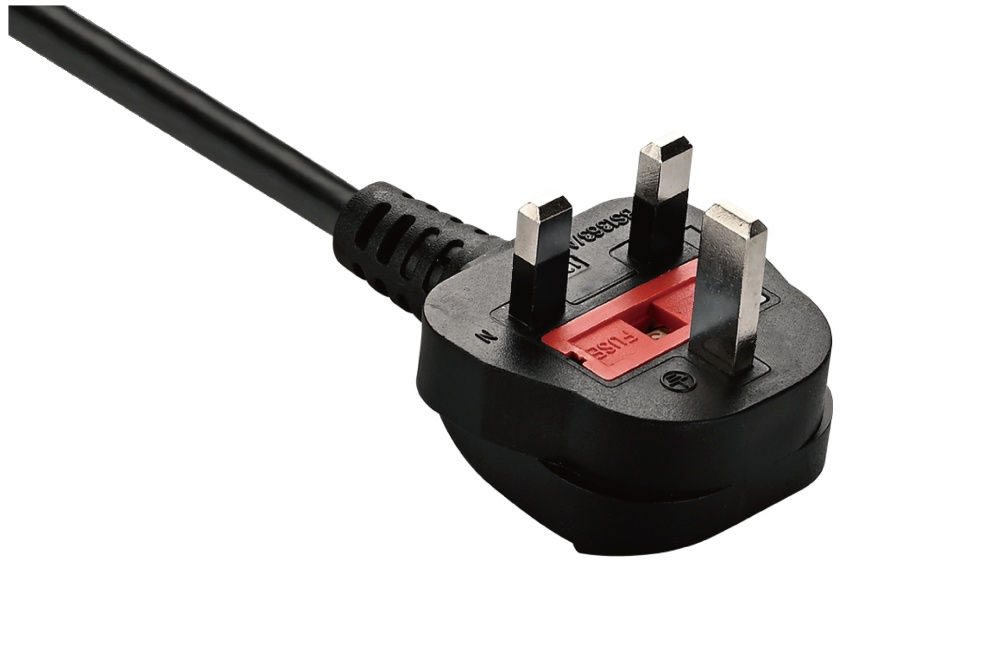
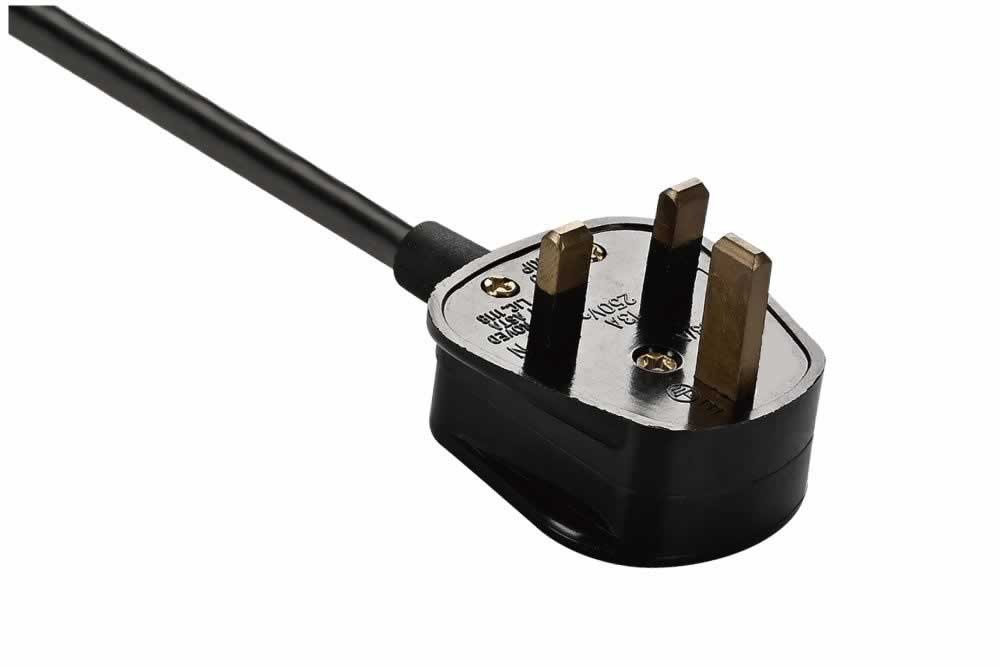
Ten builds cover the Malaysian range, in two shapes. Three are single-end leads that finish at the conductor, for appliances wired to a terminal block inside the housing. Seven are double-end leads that finish at an IEC 60320 connector, for equipment with an appliance inlet. The wall plug is identical in all ten: 13 A fused Type G to MS 589, 250 V, with a fuse from 3 A to 13 A chosen for the load.
Single-end leads: 13 A plug to open conductors
These three leave the factory with no connector on the equipment side. The conductors are stripped and tinned, fitted with Roj or ring terminals, or left with the outer jacket removed so the customer crimps in their own box. Terminal finish, strip length and the tinning or ferrule choice are set on the drawing, because they decide whether the lead fits an existing terminal block without rework.
Double-end leads: 13 A plug to IEC 60320
These seven put an appliance coupler on the equipment side: C7 and C5 for small power supplies at 2.5 A, C13 straight or angled at 10 A, C15 for inlets that run hot, and C19 at 16 A for servers and UPS units. The plug body does not change across the seven, so a single plug approval covers the family and the variant is decided by connector, angle and cable size.
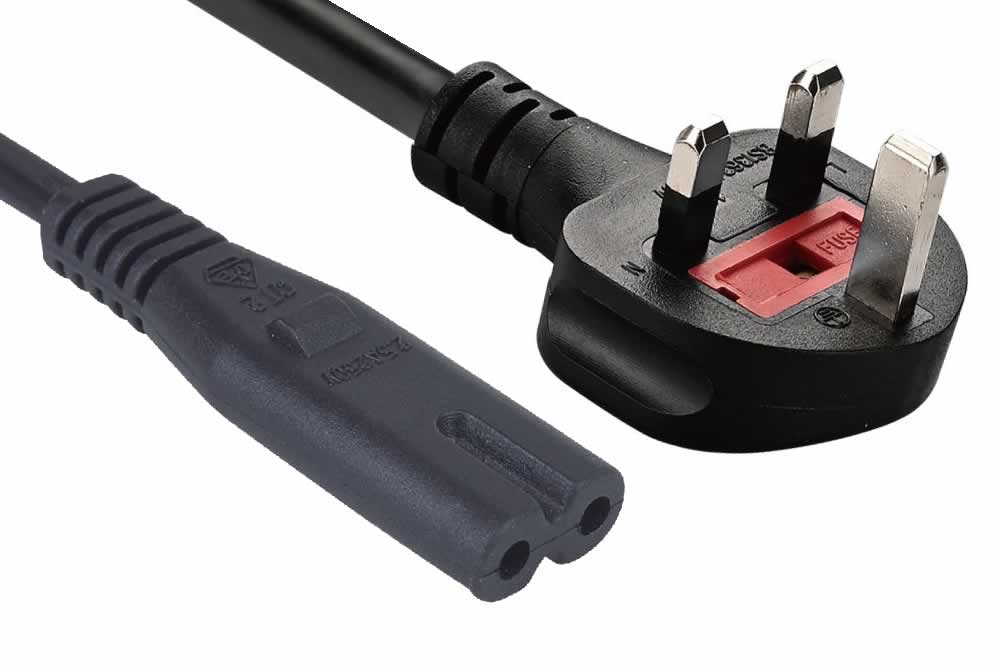
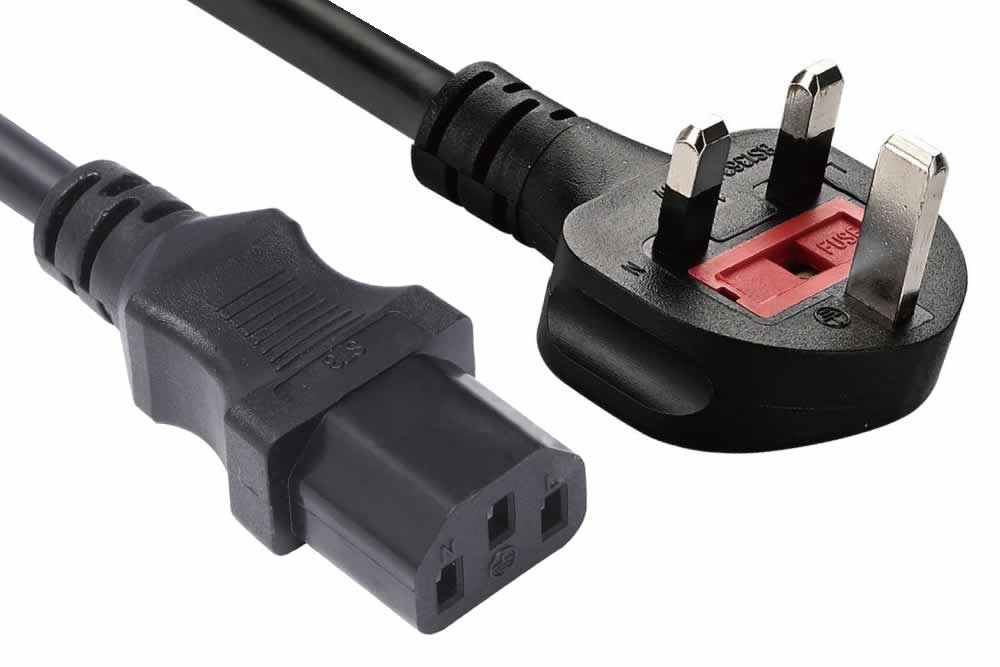
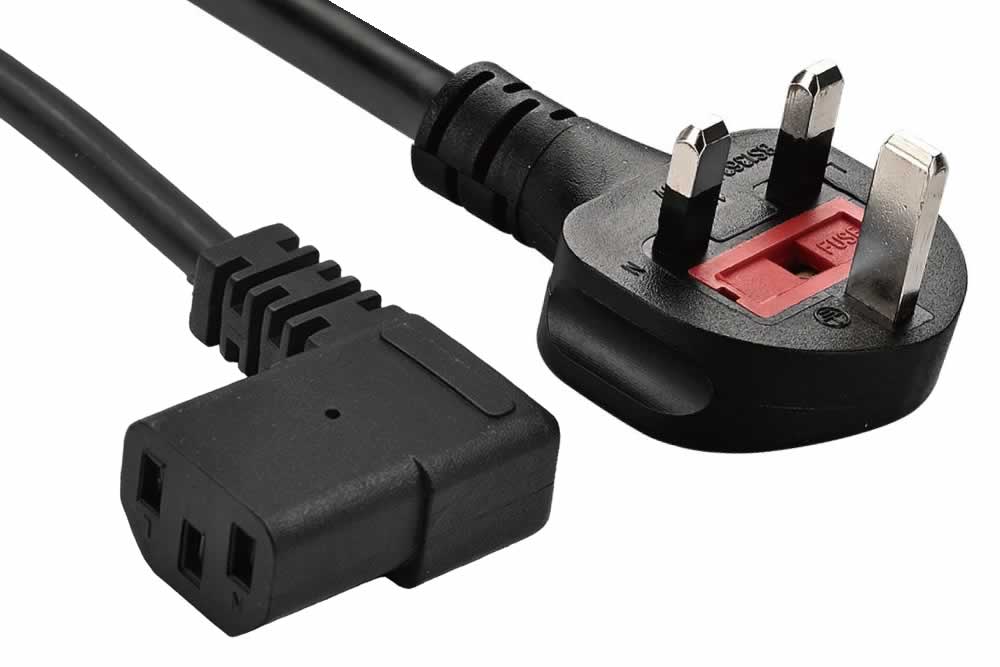
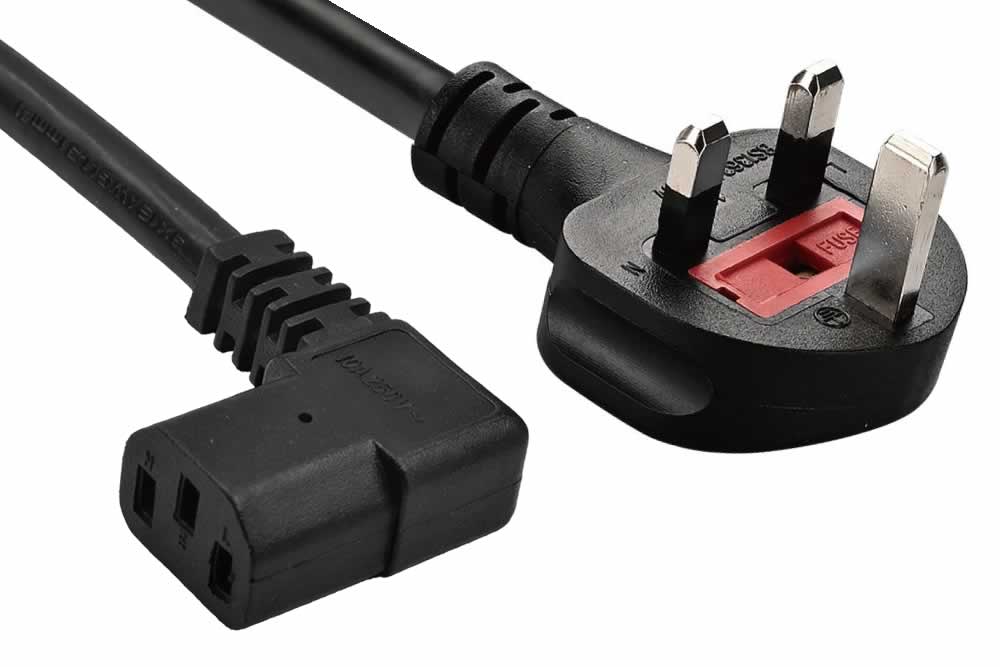
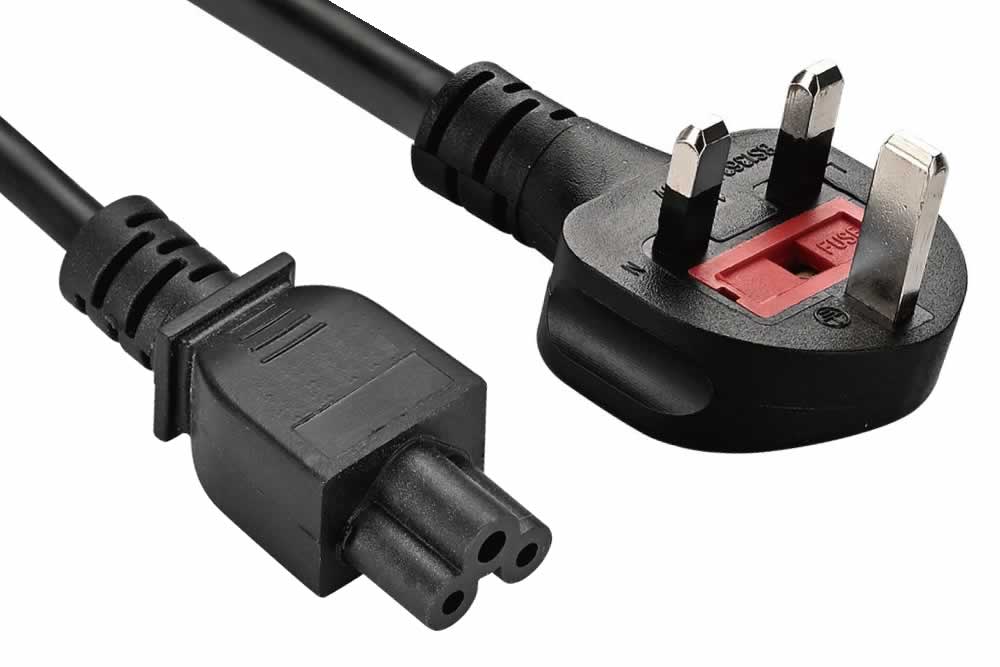
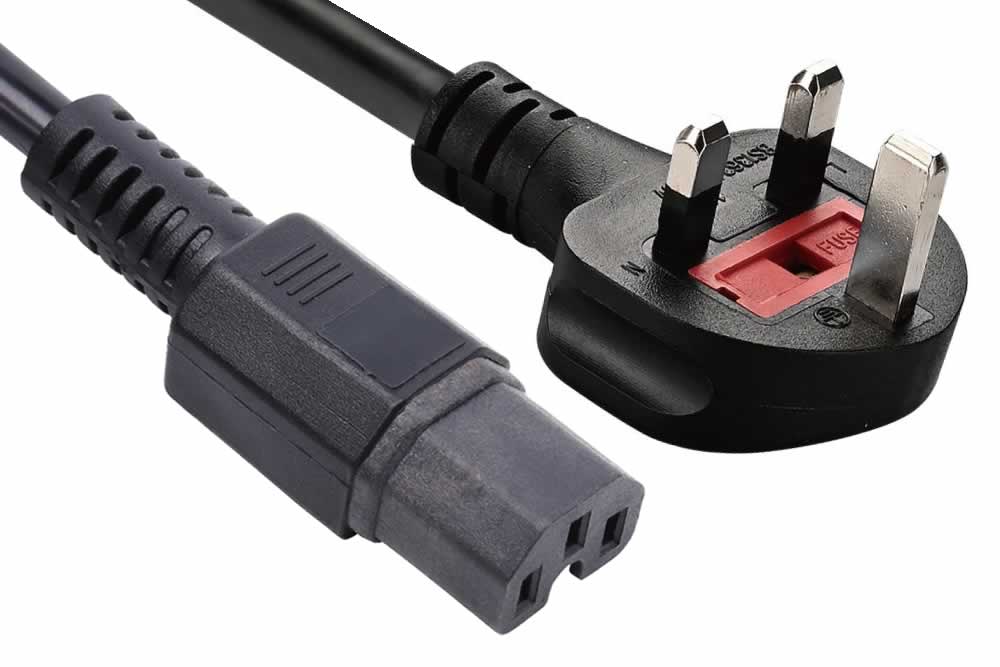
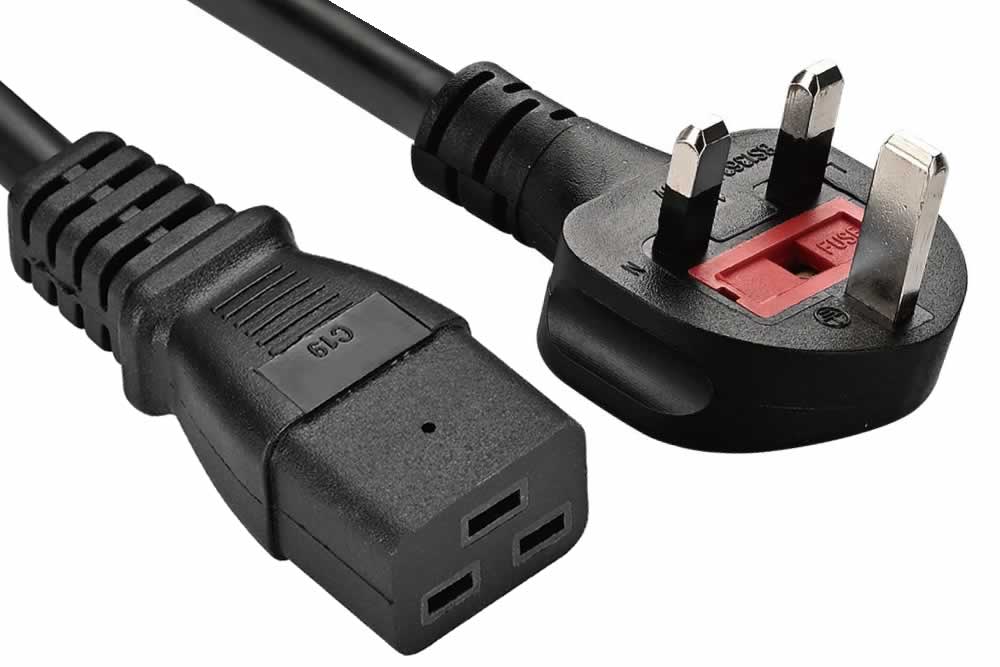
Fuse ratings run from 3 A to 13 A across both groups. Where a customer needs the same lead in two versions, an open-end build for a wired appliance and an IEC build for the same appliance after a design change, the plug and cable stay interchangeable and only the last 30 mm of the lead differs.
The 15 A Round-Pin Socket
Older Malaysian homes and many shop units still have 15 A three-pin round sockets wired for air-conditioning units and water heaters, alongside the 13 A rectangular ones. The two do not interchange: a 13 A Type G plug will not enter a 15 A round socket, and a 15 A round plug will not enter a 13 A socket. That pair of fittings, the 15 A socket and its plug, appears in Malaysia's regulated equipment list under MS 1577:2003, a standard with no direct international equivalent, kept because the fittings are still installed.
For a replacement or OEM order this is a question of which socket the appliance will meet in service. If the answer is a 15 A round socket, the cord needs the round-pin 15 A plug, and the fuse-in-plug arrangement changes, since that plug is unfused and the protection sits upstream. Two fittings, one wall. If the appliance ships with a 13 A plug and the customer intends to run it on air-conditioning wiring, the customer needs a socket change, not an adapter.
Adapter plugs exist for travellers and for temporary use. They are not a compliant way to sell an appliance into Malaysia, because the adapter is not part of the approved cord assembly and defeats the fuse-in-plug protection the market expects.
Malaysia Compared
The four markets that get confused with Malaysia most often are the UK, Singapore, Australia and continental Europe. Pin shape settles one question and the approval route settles the other, and they are separate.
| Malaysia | UK | Singapore | Europe | |
|---|---|---|---|---|
| Plug | Type G, 13 A fused | Type G, 13 A fused | Type G, 13 A fused | CEE 7/7 Schuko or CEE 7/16 Europlug |
| Mains | 240 V, 50 Hz | 230 V, 50 Hz | 230 V, 50 Hz | 230 V, 50 Hz |
| Fuse in plug | Yes, BS 1362 | Yes, BS 1362 | Yes, BS 1362 | No |
| Shuttered socket | Yes | Yes | Yes | Partly, depends on the socket |
| Standard | MS 589-1, MS 589-2 | BS 1363 | SS 145 | IEC 60884, CEE 7 |
| Market approval | ST CoA with ST-SIRIM label | None for the plug itself; ASTA is voluntary third-party | Safety Mark, Consumer Protection (Safety Requirements) Registration | CE self-declaration for the appliance |
| Interchangeable | Same pins as UK and Singapore | Same pins as Malaysia | Same pins as Malaysia | No, different pin system |
Same pins, different paperwork. A cord built to BS 1363 will physically work in Malaysia and is a sound starting point for the design, but the approval file has to be rebuilt. Details for the British version, including fuse selection and ASTA, sit in the UK power cord guide; the Malaysian product range itself is at Malaysia SIRIM power cords.
What to Put on the Order
A Malaysian cord order that goes right the first time carries six things:
- Standard and revision: MS 589-1:2011 for the plug, and the socket standard the end product will meet
- Fuse rating in the plug top: 3 A, 5 A, 7 A, 10 A or 13 A, with the appliance wattage behind the choice
- Cable code and conductor size, for example H05VV-F 3G1.0, plus the length measured plug face to connector tip
- Jacket colour and any printing required on the cable or the plug
- Equipment end: connector type and angle, or the terminal style and strip length
- Approval route: who holds the CoA, and which party's name goes on the label
If the model already has a CoA, quote the certificate number on the purchase order and the factory can match the approved construction exactly. If it does not, start with the custom power cord guide to fix the six variables before drawings are issued.
Common Applications
Four patterns cover most of the volume that leaves the factory with a Malaysian plug on it. The plug stays the same; what changes is the fuse, the cable and the connector at the other end.
Office and IT
13 A plug to C13 or C5 on 1.0 mm2, 10 A fuse. Monitors, desktops, POS terminals, network switches and the C13 outlets on a rack PDU. Standard length 1.8 m, black or grey jacket.
Kitchen and white goods
Moulded plug on 1.5 mm2 with a 13 A fuse. Kettles, rice cookers, microwaves, washing machines and dishwashers. The appliance end is usually a C15 or a terminal block inside the housing.
Air-conditioning and water heaters
Often wired to the legacy 15 A round-pin socket rather than a 13 A outlet. The cord has to match the socket in the building, and on that fitting the fuse is upstream, not in the plug.
Outdoor and industrial
H05RN-F or H07RN-F instead of PVC, with IP44 connectors or an IEC 60309 plug where the lead leaves the building. Site equipment, pumps, garden tools and event lighting.
Need a Malaysia Cord Built to MS 589?
Moulded and rewireable 13 A plugs, 3 A to 13 A fuses, H05VV-F and H07RN-F cable, IEC 60320 connectors from C5 to C19, and the test documentation that a Suruhanjaya Tenaga application needs.
See Malaysia SIRIM Power Cords Request a Custom Quote