
What Is an American Power Cord?
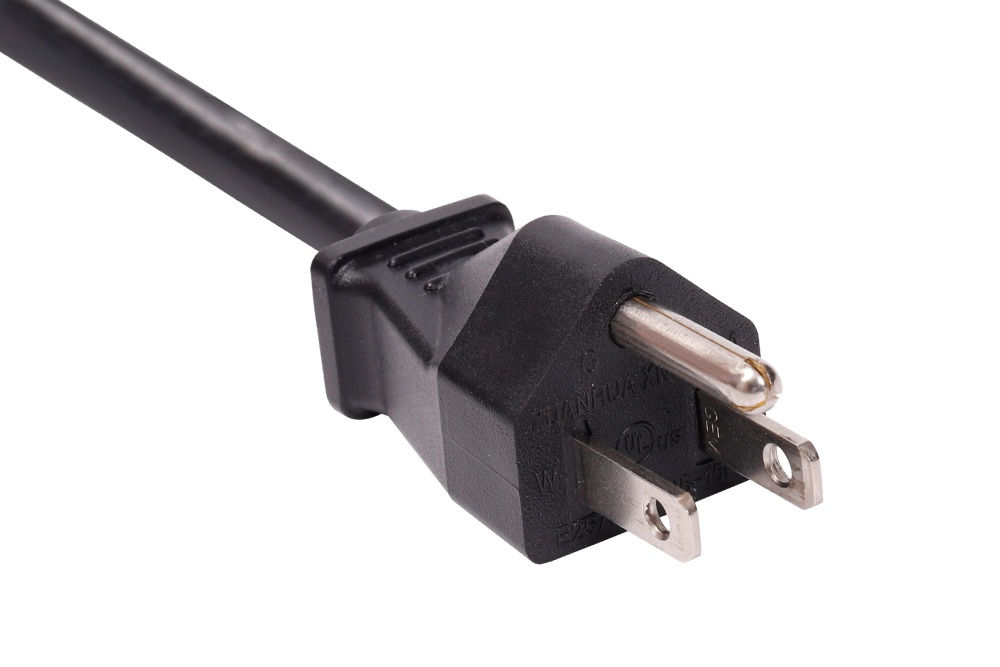
An American power cord is a flexible cord fitted with a NEMA plug on the supply end. The configuration of that plug, the blade shape, the pin spacing and the presence or absence of a ground pin, is defined by NEMA WD 6 and tells you the voltage, the current rating and whether the plug is grounded. The other end of the cord either carries an IEC 60320 appliance connector (a cord set) or is stripped, tinned or crimped for wiring inside the equipment (a power supply cord).
Three separate standards sit behind one finished cord: UL 817 covers the cord set or power supply cord as a complete assembly, UL 498 covers the plug and receptacle bodies, and UL 62 covers the flexible cable itself. Canadian acceptance follows the same three areas under CSA C22.2 No. 21, No. 42 and No. 49. A cord built for the US market with a cUL or CSA mark on the same production run can ship to Canada without a second design.
One cord, two markets: the US and Canada share the NEMA plug system and 60 Hz mains, so a single UL/cUL listed cord assembly serves both countries. Mexico and other 60 Hz markets accept the same configurations where the local standard references NEMA.
| Item | Detail |
|---|---|
| Plug configurations | NEMA WD 6, straight-blade and twist-locking |
| Voltages in use | 120 V single-phase, 208 V and 240 V split-phase or three-phase, 277 V commercial lighting, 480 V three-phase |
| Frequency | 60 Hz |
| Cord set / power supply cord | UL 817, CSA C22.2 No. 21 |
| Plugs and receptacles | UL 498, CSA C22.2 No. 42 |
| Flexible cable | UL 62: SPT-1, SPT-2, SVT, SJT, SJTW, SOOW |
| Configurations we mold | 1-15, 5-15, 5-20, 5-30, 6-15, 6-20, 6-30, 6-50, 7-15, 7-20, 10-30, 10-50, 11-30, 11-50, 14-20, 14-30, 14-50, 15-30, 15-50 |
| Certification marks | UL, cUL, cULus, ETL, CSA |
| Materials compliance | RoHS, REACH, PAHs, California Proposition 65 |
NEMA Straight-Blade Configurations
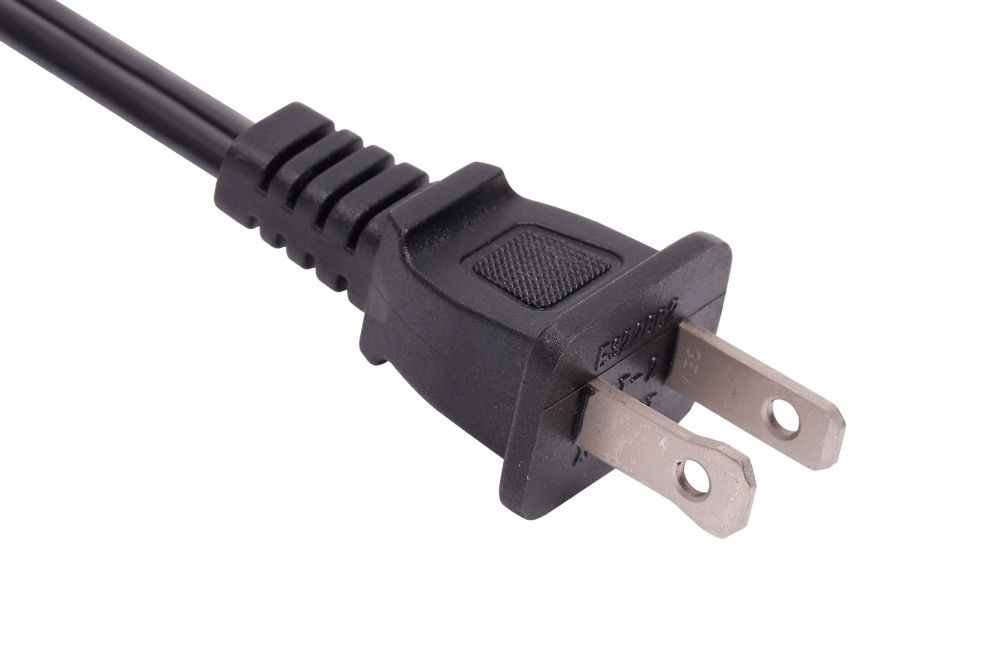
Straight-blade plugs are the type used on household and commercial equipment in North America. The code reads left to right: the number before the dash is the configuration family, which fixes the voltage and the pin arrangement, the number after the dash is the amperage, and the letter P marks a male plug while R marks a female receptacle. A 5-15P is therefore a 125 V, 15 A grounded straight-blade male plug, and a 6-20R is its 250 V, 20 A female counterpart. The full standard table, including twist-locking types, is in the NEMA plug and connector guide.
| Configuration | Rating | Poles / wires | Typical equipment |
|---|---|---|---|
| 1-15P / 1-15R | 15 A, 125 V | 2-pole, 2-wire | Ungrounded appliances, double-insulated lamps, small power supplies (Type A) |
| 5-15P / 5-15R | 15 A, 125 V | 2-pole, 3-wire | The standard North American household plug (Type B) |
| 5-20P / 5-20R | 20 A, 125 V | 2-pole, 3-wire | 20 A kitchen, workshop and office circuits |
| 5-30P / 5-50R | 30 A to 50 A, 125 V | 2-pole, 3-wire | Higher-current 125 V equipment and RV pedestals |
| 6-15P / 6-15R | 15 A, 250 V | 2-pole, 3-wire | 240 V heaters, compressors and bench tools |
| 6-20P / 6-20R | 20 A, 250 V | 2-pole, 3-wire | 240 V commercial equipment, air conditioners, welders |
| 6-30P / 6-30R | 30 A, 250 V | 2-pole, 3-wire | Single-voltage 240 V appliances and shop equipment |
| 6-50P / 6-50R | 50 A, 250 V | 2-pole, 3-wire | Welding machines, plasma cutters, older EV chargers |
| 7-15P / 7-20P | 15 A to 20 A, 277 V | 2-pole, 3-wire | Single-phase commercial and industrial lighting |
| 10-30P / 10-30R | 30 A, 125/250 V | 3-pole, 3-wire | Legacy dryers on pre-1996 wiring, no separate ground |
| 10-50P / 10-50R | 50 A, 125/250 V | 3-pole, 3-wire | Legacy ranges and older RV pedestals |
| 14-20P / 14-20R | 20 A, 125/250 V | 3-pole, 4-wire | 240 V equipment that also needs a neutral |
| 14-30P / 14-30R | 30 A, 125/250 V | 3-pole, 4-wire | Dryers and 30 A generator inlets, the current standard |
| 14-50P / 14-50R | 50 A, 125/250 V | 3-pole, 4-wire | Electric ranges, 50 A RVs, EV charging cords |
| 11-30P / 11-50P | 30 A to 50 A, 250 V | 3-pole | Three-phase equipment and heavier industrial loads |
| 15-30P / 15-50P | 30 A to 50 A, 250 V | 3-pole | Three-phase 250 V machinery |
All of these are molded to order. Molded plugs give a sealed, tamper-resistant assembly for production runs, while rewireable versions open on a screw or two and suit repairs, prototypes and one-off lengths.
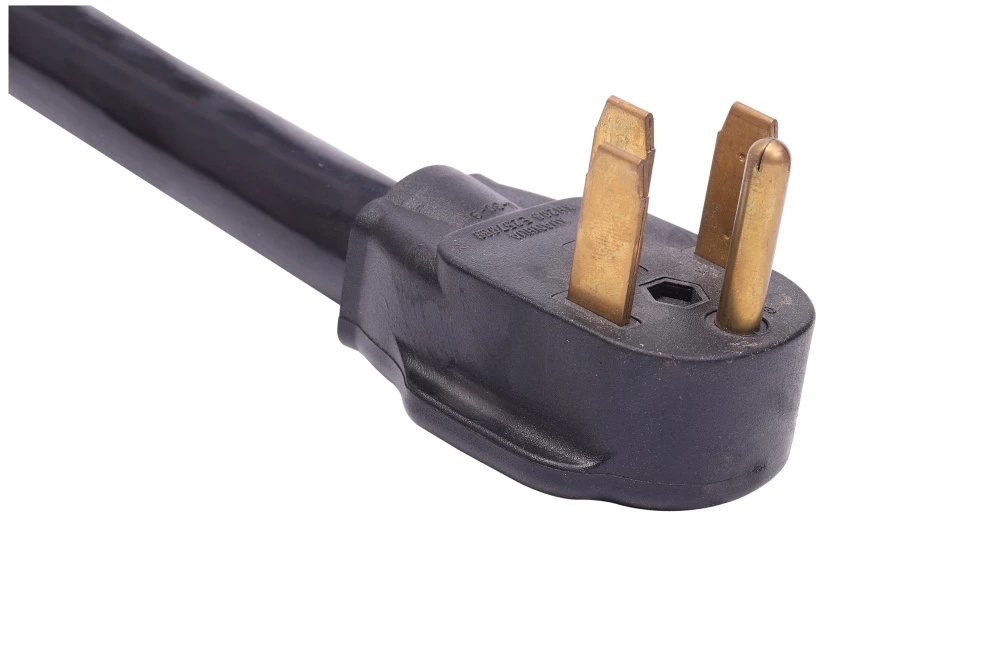
Plug Body Variants
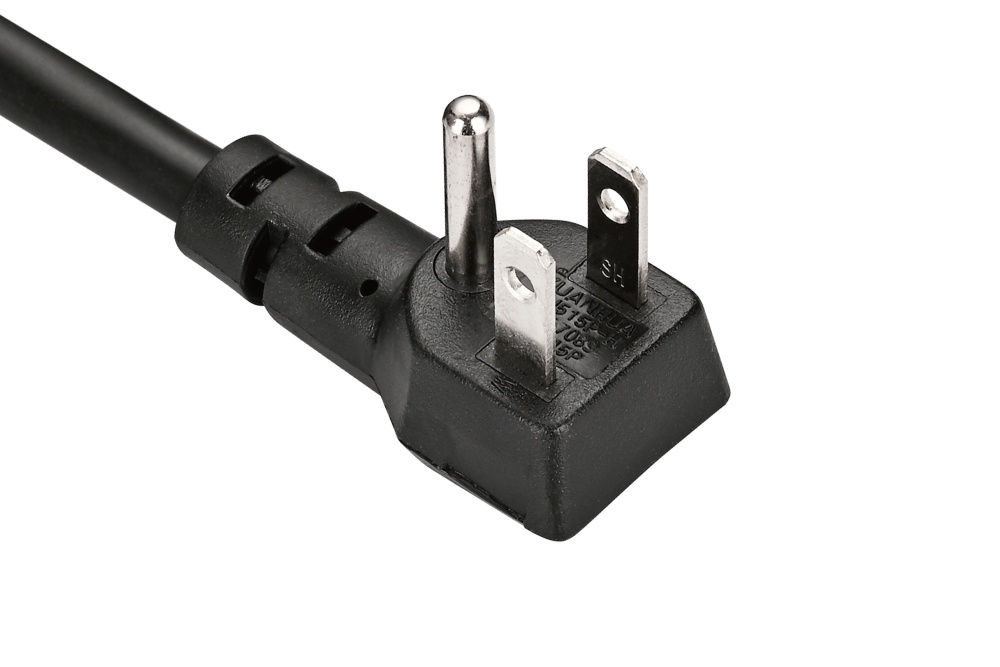
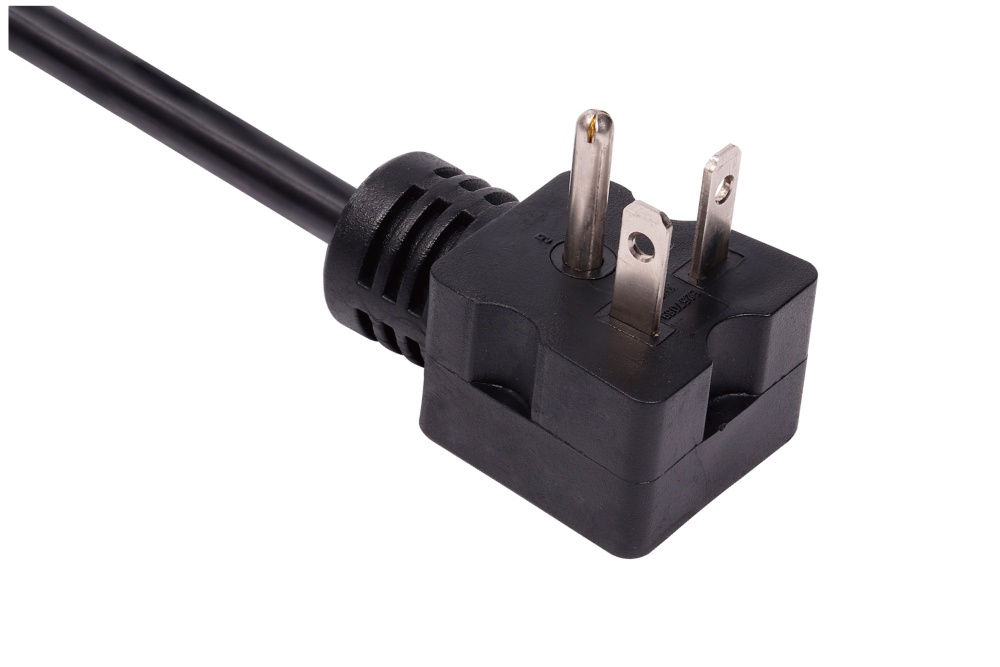
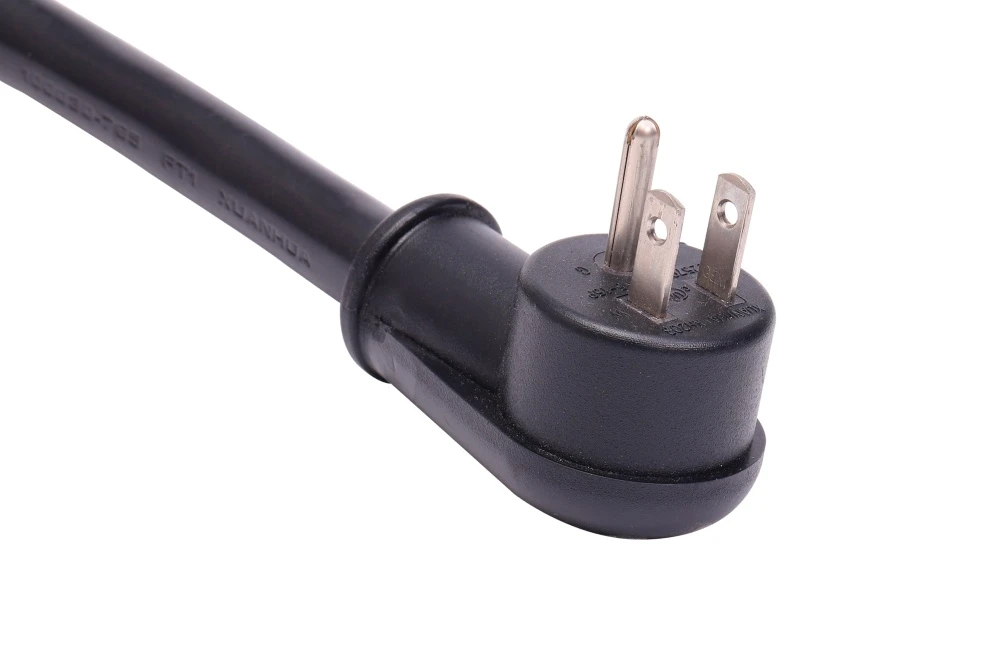
The NEMA code fixes the blades; the body around them is what solves a mounting or cable-routing problem. The same 5-15P blade set is available in more than a dozen body styles, and the choice is usually driven by where the cord has to run once it leaves the outlet.
| Body style | What it does | Typical use |
|---|---|---|
| Straight | Cable leaves the plug in line with the blades | General appliances and power supplies with open space at the outlet |
| Right angle / left angle | Cable exits at 90 degrees, so the plug sits flat against the wall | Wall-mounted TVs, furniture pushed against a wall, equipment racks |
| 45 degree flat | Low-profile body angled at 45 degrees | Tight spaces behind appliances and desks |
| Flange mount / stop flange | Screw flange fixes the plug to a panel or chassis | Equipment panels, vending machines, machinery |
| Strain relief | Molded boot grips the cable and spreads bending force at the entry point | Power tools, industrial cords, cables that are pulled and coiled daily |
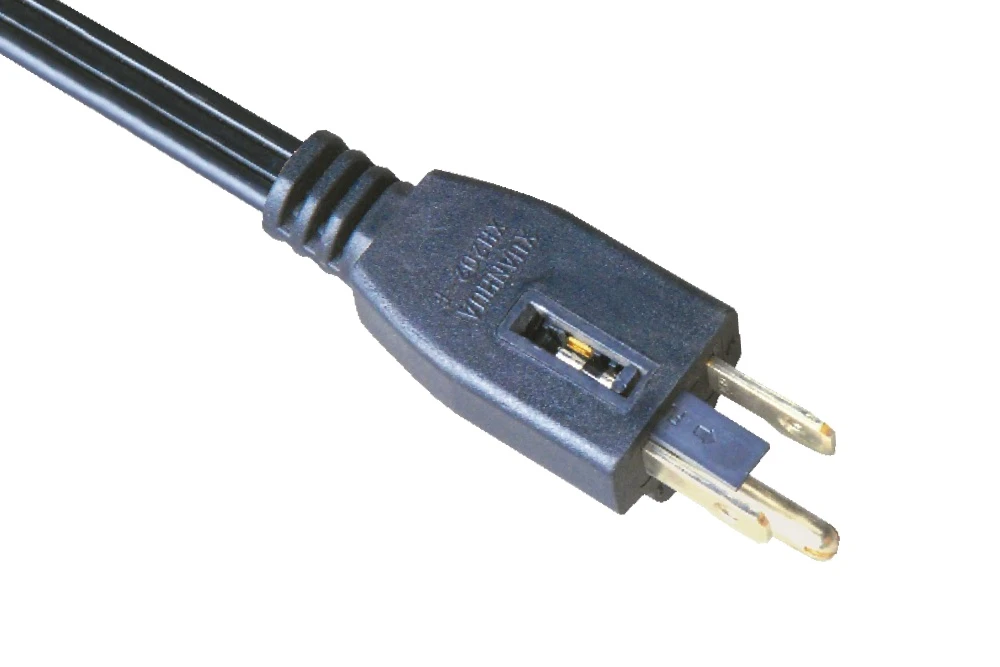
| Fused | Cartridge fuse holder inside the plug body | Lighting strings and small appliances needing local protection |
| Snap lock / anti-pull lock | Extra mechanical retention against pull-out | Equipment that is moved or unplugged often |
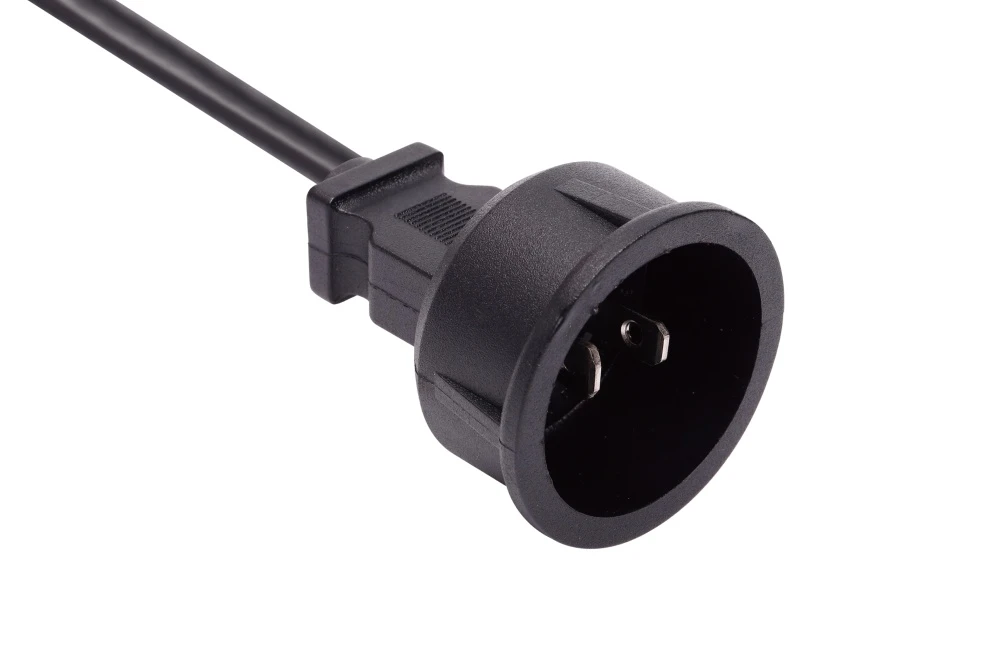
| Feed-through / pass-through | Male plug with a female outlet built into the body | Daisy-chained tools, garden and site equipment |
| Rewireable | Opens for field wiring with screw terminals | Repairs, retrofits and one-off lengths |
| Transparent | Clear body shows the terminals for inspection | Prototypes, field inspection, demonstration units |
UL and CSA Certification
An American power cord is certified as an assembly, not as a pile of parts. A testing house such as UL or Intertek evaluates the finished cord set against UL 817, checks the plug body against UL 498 and the cable against UL 62, then issues a listing with a file number that stays traceable to the factory. The same assembly is evaluated for Canada under CSA C22.2 No. 21 and No. 42 and can carry a combined cULus mark.
For retail and OEM programs the certificate matters as much as the mark: buyers typically ask for the certificate with its standard edition, the test report for the exact cable compound used, and a declaration of conformity. Material compliance is normally documented separately for RoHS, REACH, PAHs and California Proposition 65.
Cable Types and Ratings
The cable carries the current, and the jacket decides where the cord can be used. North American cordage is named by a letter code: the first letter is the service (S for general use, SV for vacuum cleaner duty, SP for parallel lamp cord), the following letters describe the jacket and insulation (T for thermoplastic, J for junior service, O for oil-resistant, W for weather and water resistance).
| Cable | Construction | Where it is used |
|---|---|---|
| SPT-1 / SPT-2 | Flat parallel, 18 AWG, 2-conductor; SPT-2 has the thicker jacket | Lamps, lighting strings and small double-insulated appliances |
| SVT | Round, 18 AWG, 2 or 3-conductor | Vacuum cleaners, small kitchen appliances, office equipment |
| SJT | Round, 18 to 16 AWG, 2 or 3-conductor | General appliance and IT cords where a heavier jacket is wanted |
| SJTW | As SJT with an outdoor-rated jacket | Outdoor tools, garden equipment, temporary site power |
| SOOW | Heavy-duty rubber, 18 to 2 AWG, up to 600 V | Industrial machinery, welding equipment, harsh and wet locations |
Conductor gauge
Gauge is chosen from the current the cord has to carry and the conditions the listing allows, not from the plug alone. A 10 A appliance normally runs on 18 AWG, a 13 A appliance on 16 AWG, and a 15 A or 20 A cord on 14 AWG or heavier. Long runs step up a size to hold voltage drop down, and every cord is marked with its gauge and temperature rating on the jacket. Provide the equipment current and the run length and we confirm the conductor size with the datasheet.
Termination at the equipment end
The far end can be an IEC 60320 connector (C5, C7, C13, C15, C19 or C20), a NEMA receptacle for an extension cord, stripped and tinned conductors, or crimped ring and fork terminals for screw-down connections. The full list, grouped by core count, is in the power cord wire end options guide.
Connector Ends
The equipment end is chosen with the device, not with the plug. A 5-15P cord set usually ends in a C13 connector, and the same plug body is built with C5, C7, C15 or C19 ends when the appliance needs them.
| Connector | Standard | Cores / Rating | Typical Device |
|---|---|---|---|
| IEC C13 | IEC 60320 | 3-core / 10 A | PC towers, monitors, printers, most IT equipment; the default US cord set |
| IEC C13 left / right angle | IEC 60320 | 3-core / 10 A | Wall-mounted screens and equipment where a straight connector does not fit |
| IEC C14 | IEC 60320 | 3-core / 10 A | The matching inlet end: edge cords and C13-to-C14 jumper leads |
| IEC C5 | IEC 60320 | 2-core / 2.5 A | Laptop and notebook power supplies, small chargers (cloverleaf) |
| IEC C7 | IEC 60320 | 2-core / 2.5 A | Class II audio, video, set-top boxes and consoles (figure-8) |
| IEC C15 | IEC 60320 | 3-core / 10 A, 120 °C | Kettles, urns, cookers and other high-temperature appliances |
| IEC C19 | IEC 60320 | 3-core / 16 A | Servers, UPS units, PDUs and rack equipment above 10 A |
| IEC C20 | IEC 60320 | 3-core / 16 A | Matching inlet for C19 leads (PDU and appliance sockets) |
| Locking C13 / C19 | IEC 60320 | 3-core / 10–16 A | Server and rack leads that must not work loose under vibration |
| 5-15R / 5-20R | NEMA WD 6 | 3-core / 15 A, 20 A | Extension cords and power taps that take a US plug |
| Open end | n/a | 2 or 3-core / by cord rating | Stripped, tinned or crimp-terminated for OEM harnesses and terminal blocks |
| IEC 60309 | IEC 60309 | 16 A / 32 A, 2P+E to 3P+N+E | Industrial and three-phase supplies, used where a NEMA 5-15 or 6-20 plug cannot carry the load |

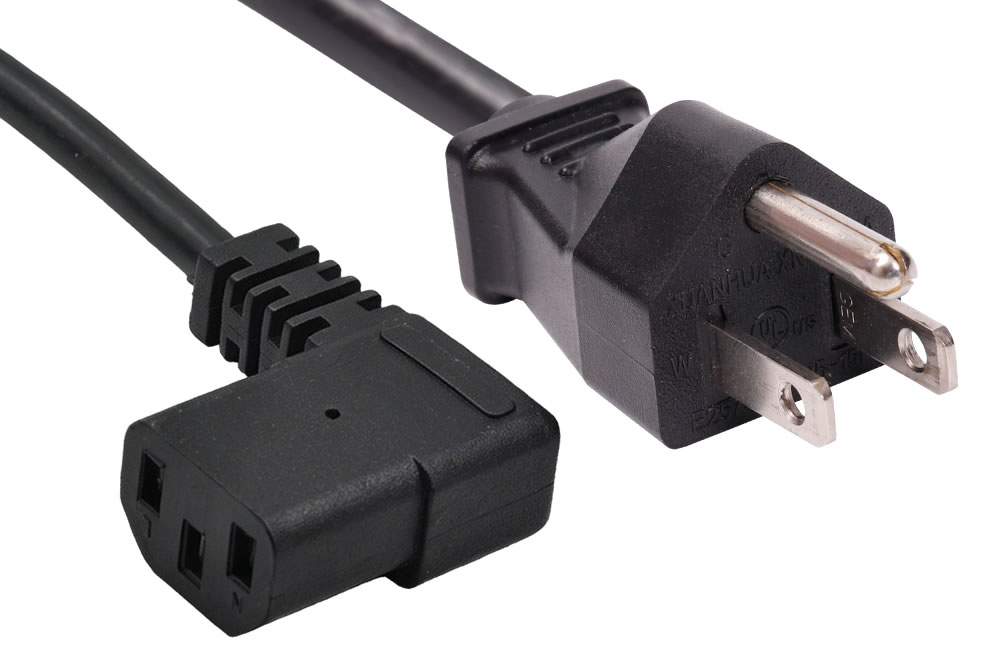


The blade rating caps the cord before the connector does: a 5-15P assembly with a C13 end delivers at most 10 A, and a C19 end stays at 16 A even on a 5-20P plug.
Connectors on their own, in straight, angled and locking versions, are listed in the IEC 60320 power cord connector range →
Standard lengths run from 0.5 m to 5 m, and any length can be made to order. Black, white and gray jackets are produced without setup cost; other colors are compounded to a Pantone or RAL reference.
120 V vs 240 V: Choosing the Right Plug
North American premises wiring gives residential and light commercial equipment a choice of 120 V or 240 V. The plug has to match the supply and the equipment, and it also has to prevent a 120 V device from being plugged into a 240 V outlet, which is the reason the pin patterns differ in the first place.
| Supply | Configurations | Equipment |
|---|---|---|
| 120 V, 15 A | 1-15, 5-15 | Most household and office equipment |
| 120 V, 20 A | 5-20 | Kitchen appliances, workshop tools, 20 A PDUs |
| 240 V, 15 A / 20 A | 6-15, 6-20 | Air conditioners, compressors, commercial kitchen equipment |
| 240 V, 50 A | 6-50 | Welders and plasma cutters, no neutral needed |
| 240 V, 30 A with neutral | 14-30 | Dryers, 30 A generator inlets |
| 240 V, 50 A with neutral | 14-50 | Electric ranges, 50 A RVs, EV charging cords |
| 277 V | 7-15, 7-20 | Commercial lighting on 480/277 V systems |
A 5-15 cord is rated 15 A. If the equipment draws more than that, the correct answer is a 5-20 or a 6-series plug matched to the receptacle, not a heavier cable on the same 15 A plug. On 240 V loads with a neutral, the 14-series four-wire plugs carry the neutral that ranges and dryers need for their control circuits.
American vs UK vs EU Cords
The three systems look similar in a photograph and are electrically different, which is why a cord made for one market cannot be used in another. The differences worth knowing when you are specifying a variant for an export program are the plug, the mains voltage and where the fuse sits.
| Feature | American | UK | EU |
|---|---|---|---|
| Plug | NEMA 1-15, 5-15 (Type A, Type B) | BS 1363 Type G | CEE 7/7 Type F / Type E |
| Mains | 120 V / 240 V, 60 Hz | 230 V, 50 Hz | 230 V, 50 Hz |
| Fuse in plug | Not required; optional fused bodies available | BS 1362 cartridge fuse, 3 A to 13 A | Not required |
| Main marks | UL, cUL, ETL, CSA | UKCA, ASTA, BSI | CE, VDE, KEMA, IMQ |
| Interchangeable | No. Plug, voltage and certification all differ. | ||
The UK side is covered in more detail in the UK power cord guide, and the plug used in a given country is listed in the world voltage and plug specifications table.
Common Applications
Most American cords we mold fall into one of the groups below. The configuration follows the equipment, and the cable follows the environment.
| Application | Configuration | Cable |
|---|---|---|
| Household appliances | 1-15, 5-15 | SPT-2, SVT, SJT |
| IT equipment, monitors, PDUs | 5-15, 5-20 to C13 / C19 | SJT, SVT |
| Power tools and site equipment | 5-15 | SJTW, SOOW |
| Air conditioning and compressors | 6-15, 6-20 | SJT, SOOW |
| Dryers and 30 A inlets | 14-30 | SOOW, SJTW |
| Ranges, RVs, EV charging | 14-50 | SOOW, SJTW |
| Welding machines | 6-50 | SOOW |
| Lighting and lighting strings | 1-15, 5-15 | SPT-1, SPT-2 |
Looking for American Power Cords with UL and CSA Certification?
We mold NEMA 1-15, 5-15, 5-20, 6-15, 6-20, 14-30 and 14-50 cords to order in straight, right-angle, flange, fused and locking bodies, with IEC 60320 connectors or terminated ends. Send the equipment voltage, amperage, grounding requirement and target market, and we confirm the configuration, the cable and the certification path.
Typical MOQ is 200 to 1,000 pieces, samples ship in 7 to 15 days and production runs 15 to 20 workdays. OEM and ODM programs, private labeling and custom lengths are standard.